
HRH Crown Prince attends Lord High Admiral’s Parade at Britannia Royal Naval College
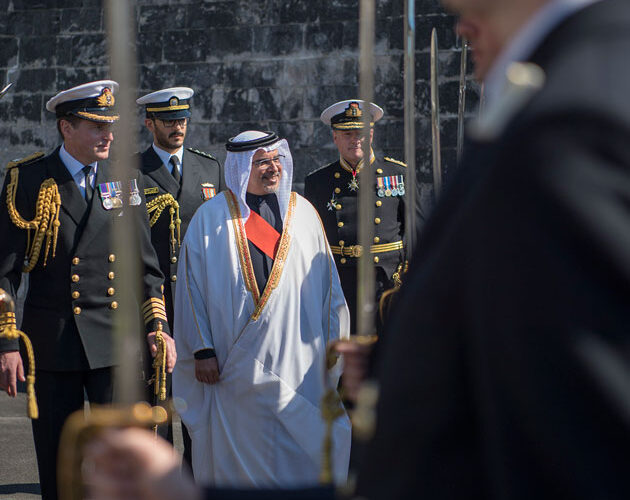
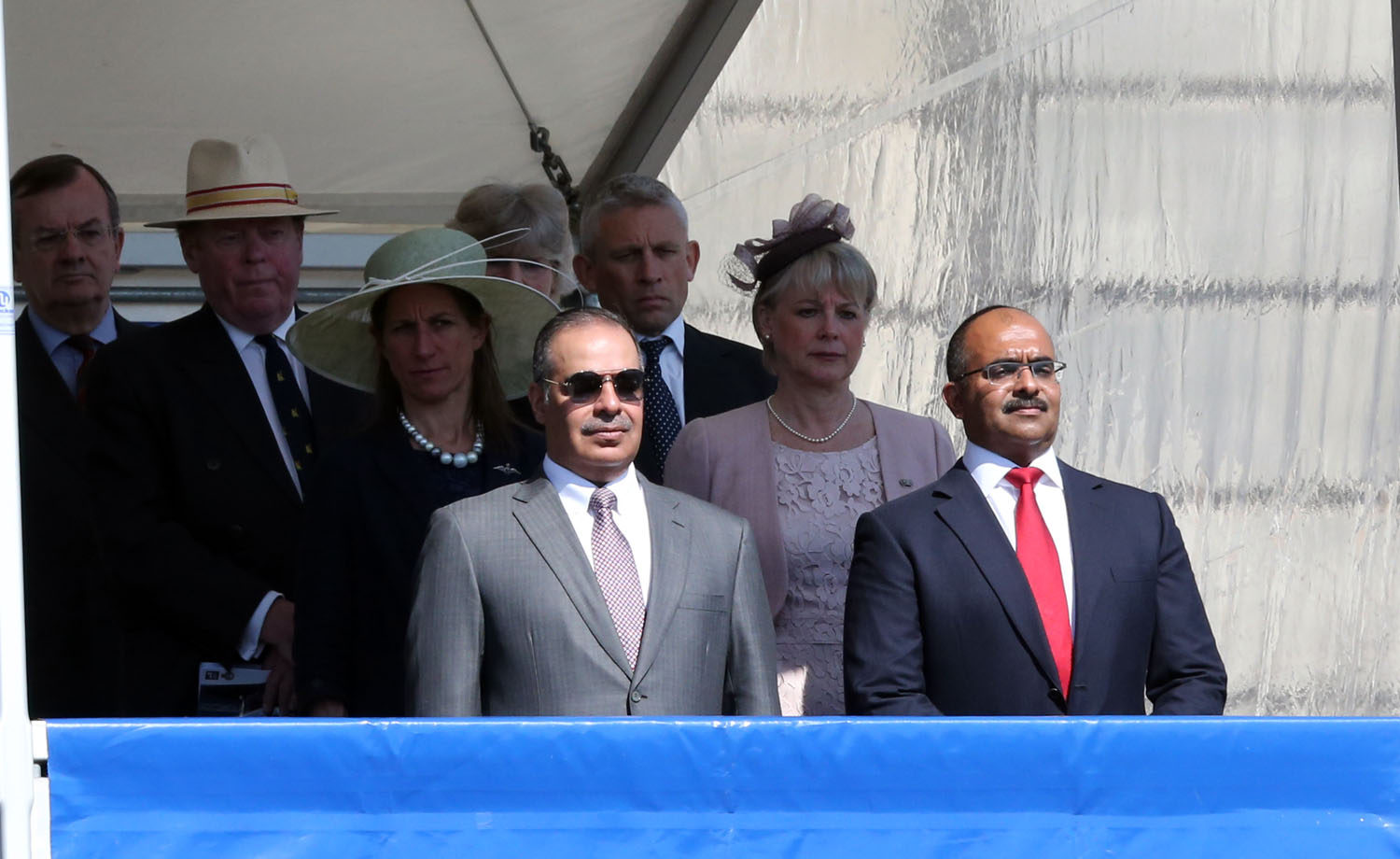
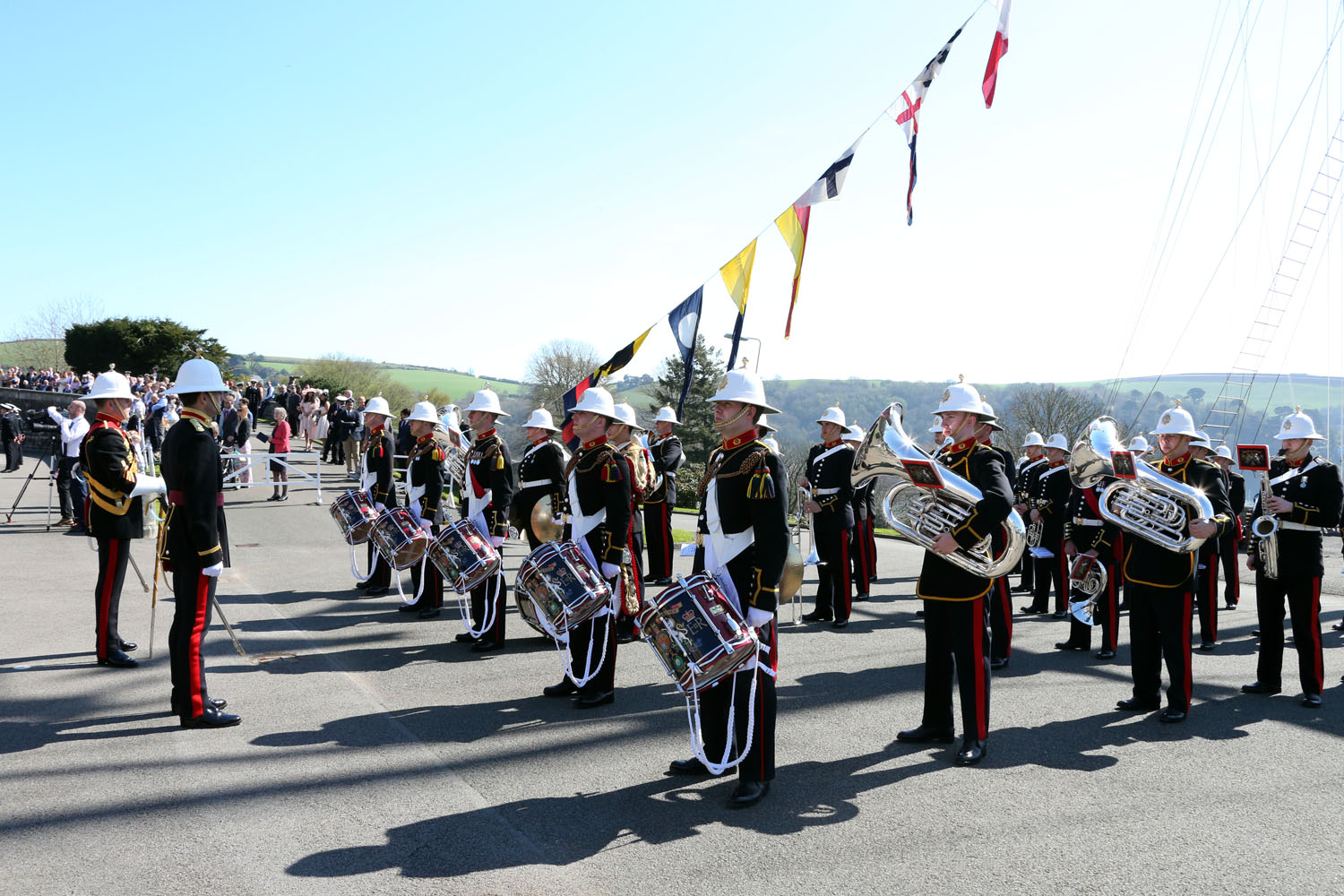
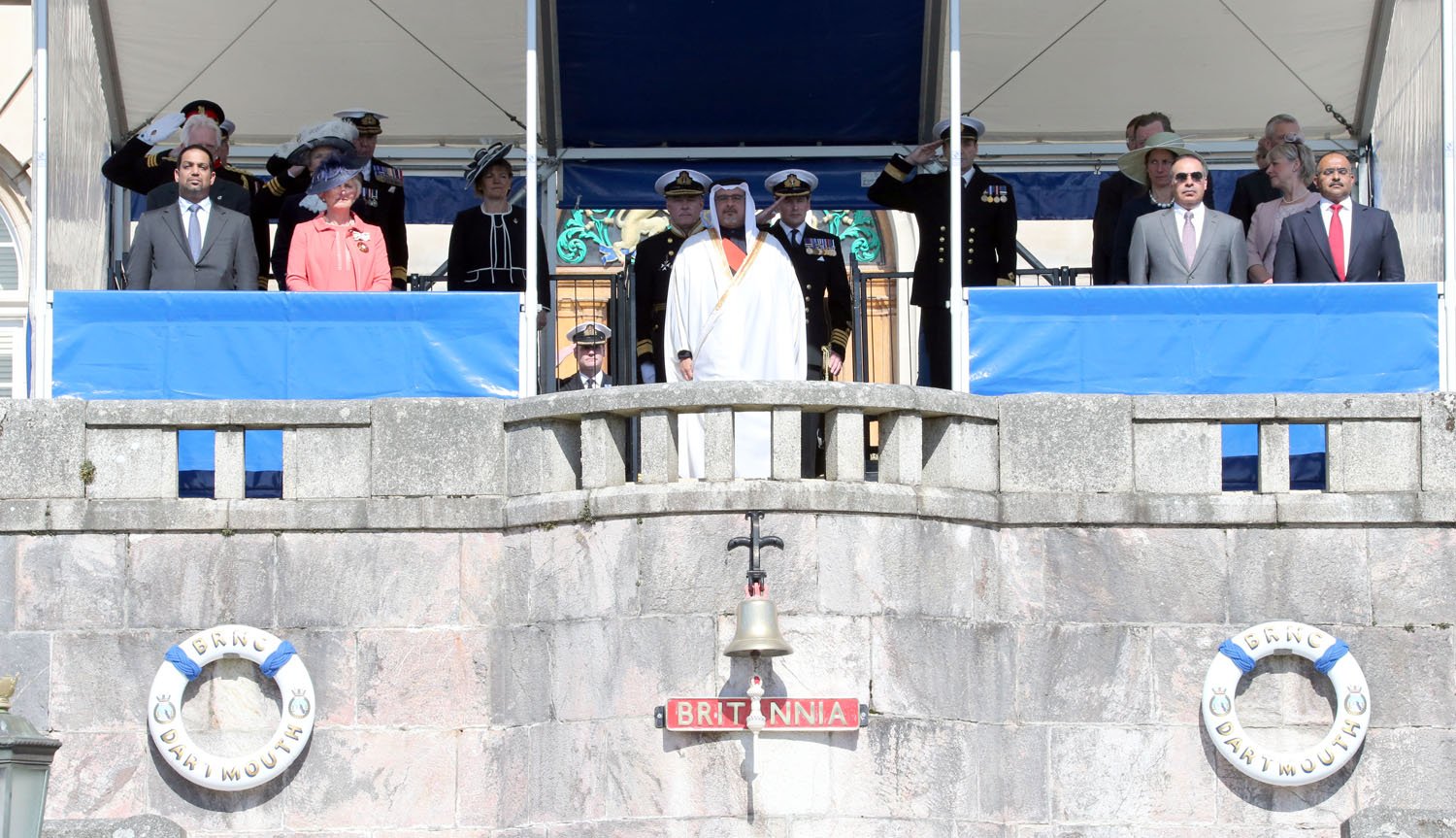
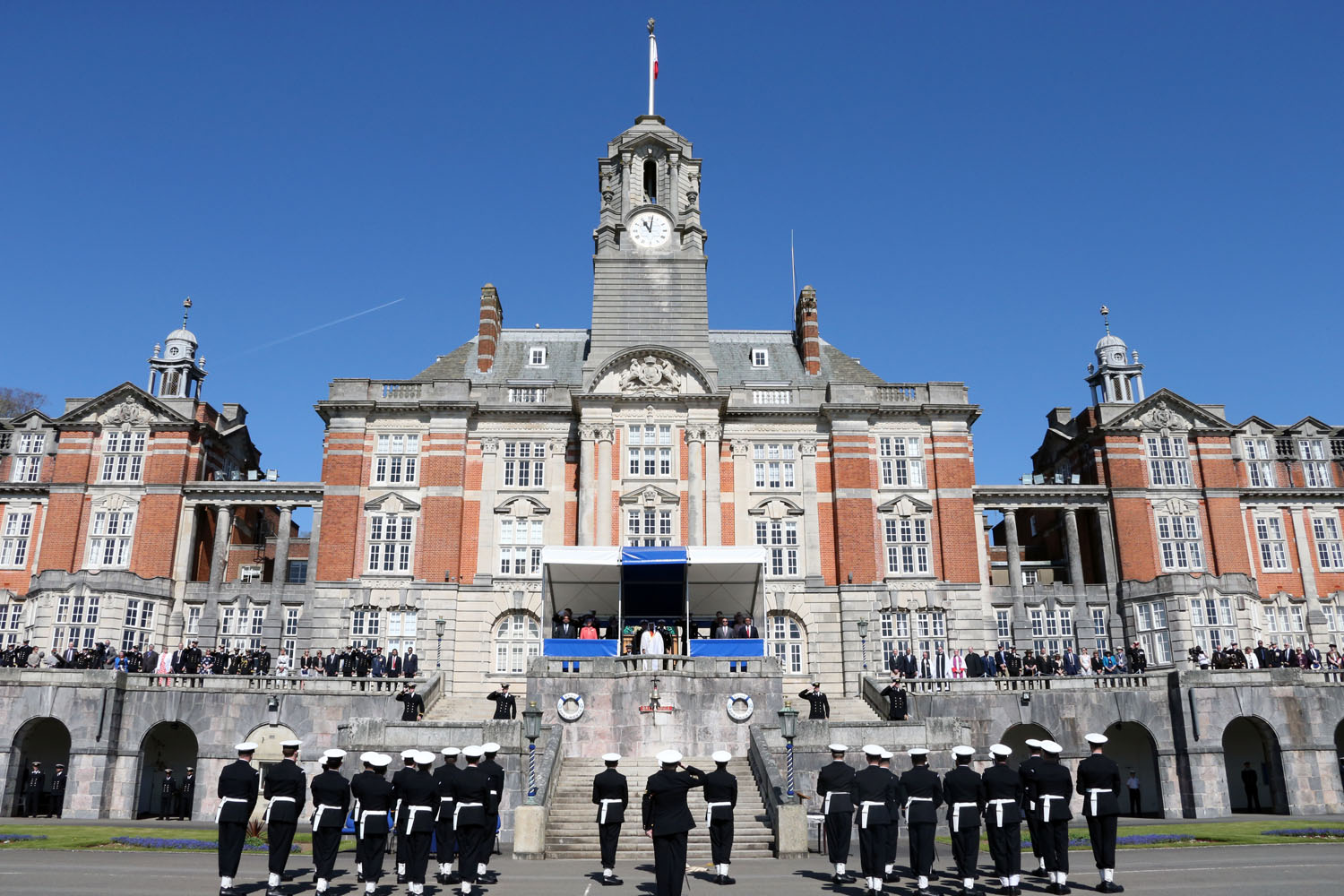
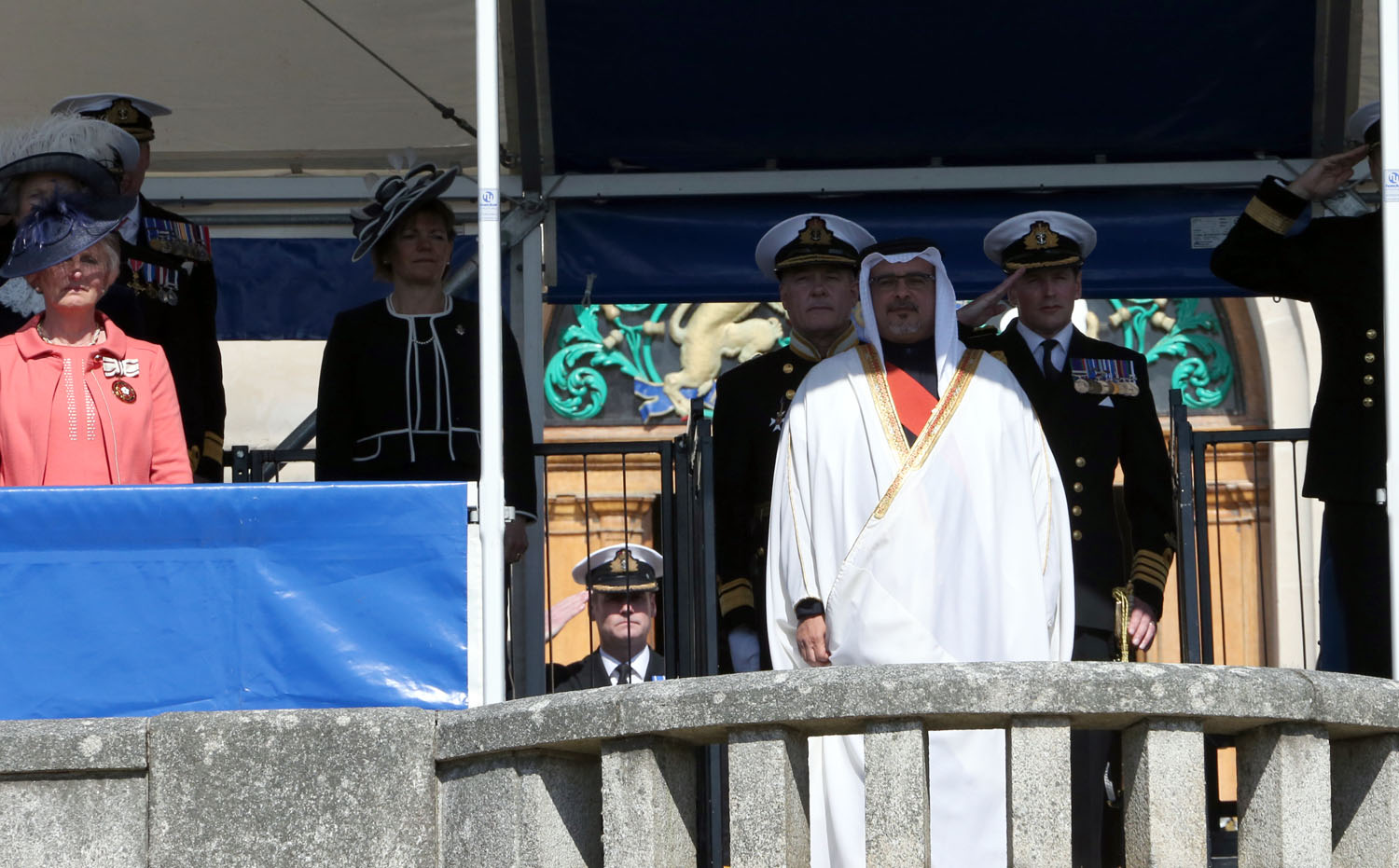
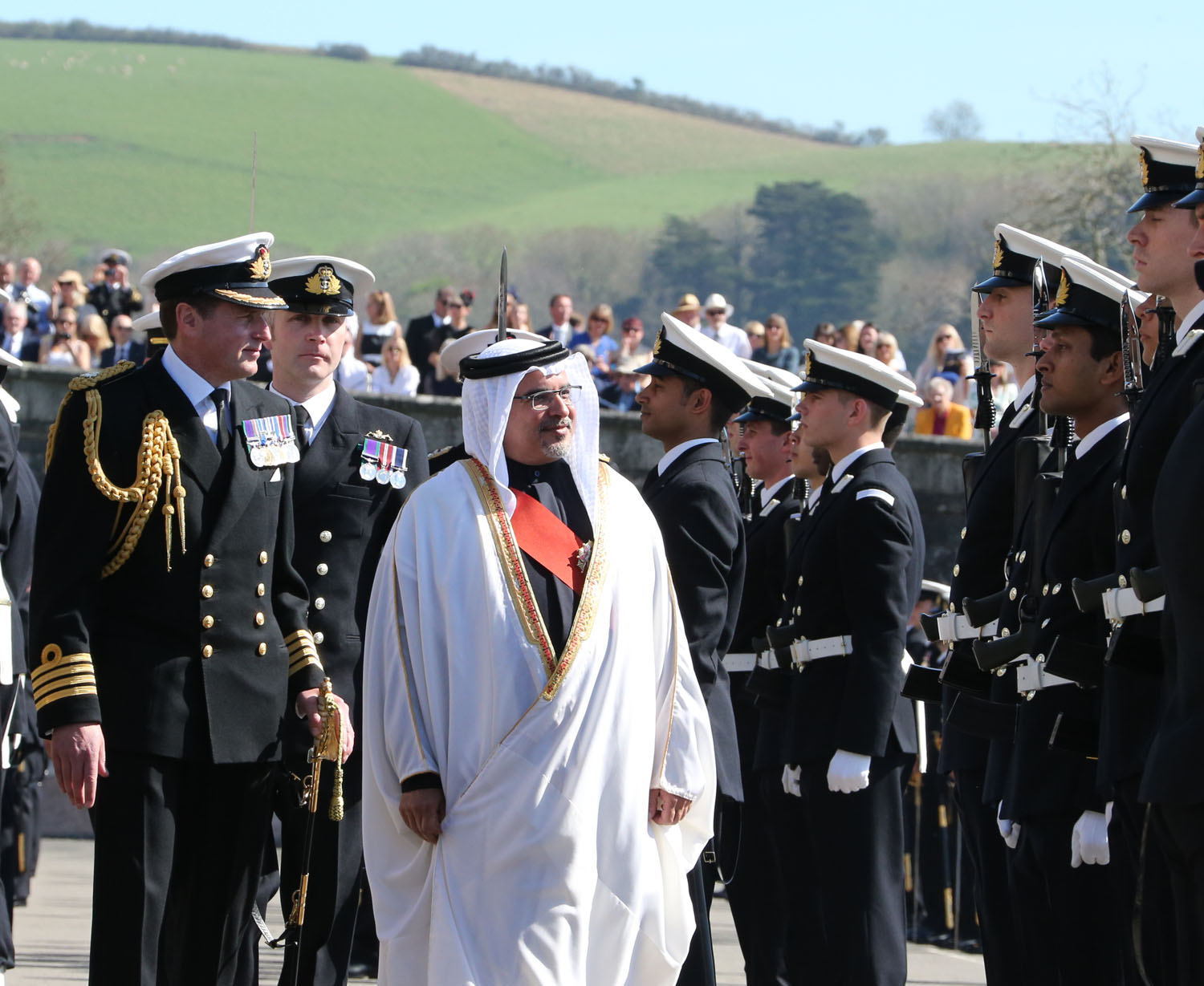
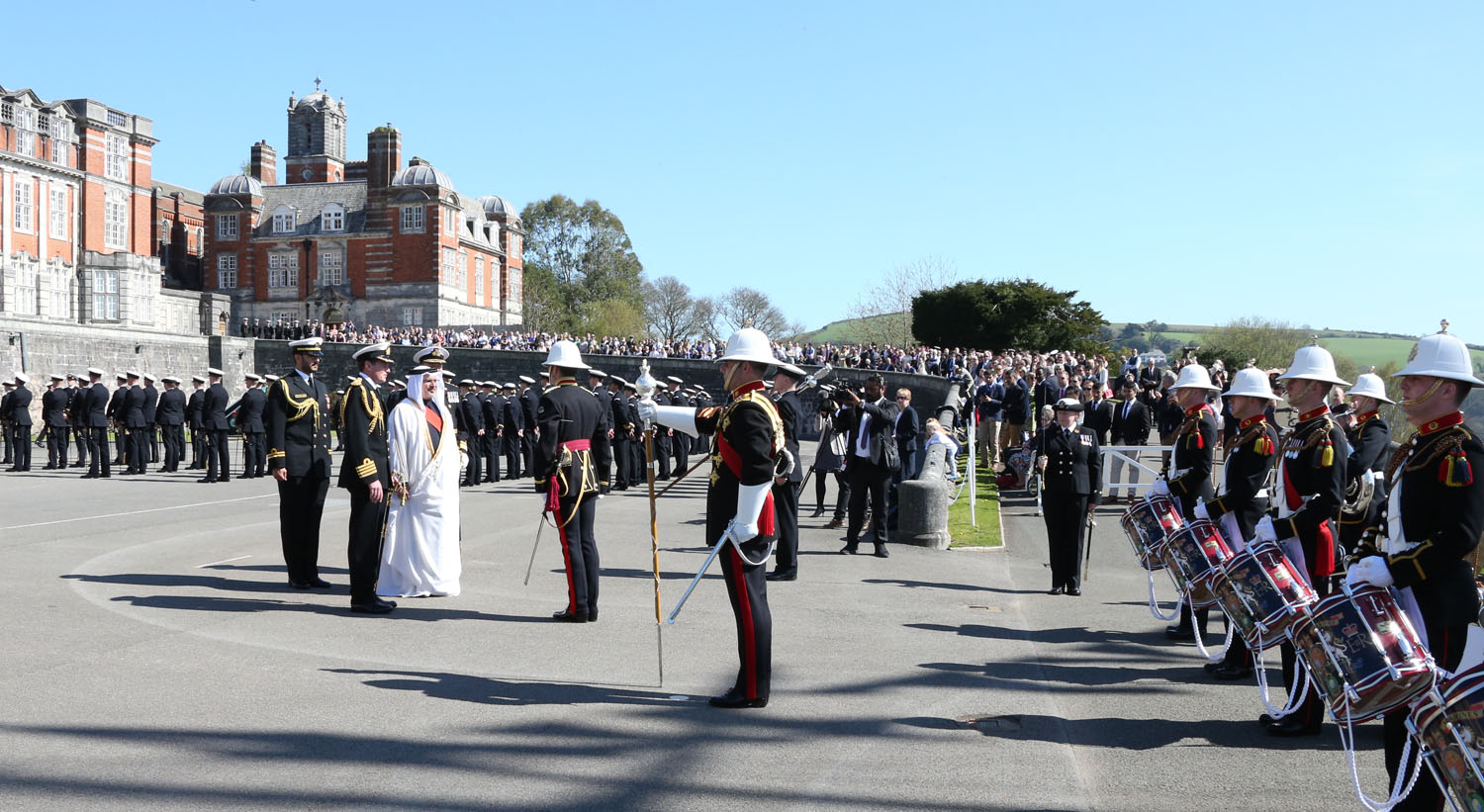
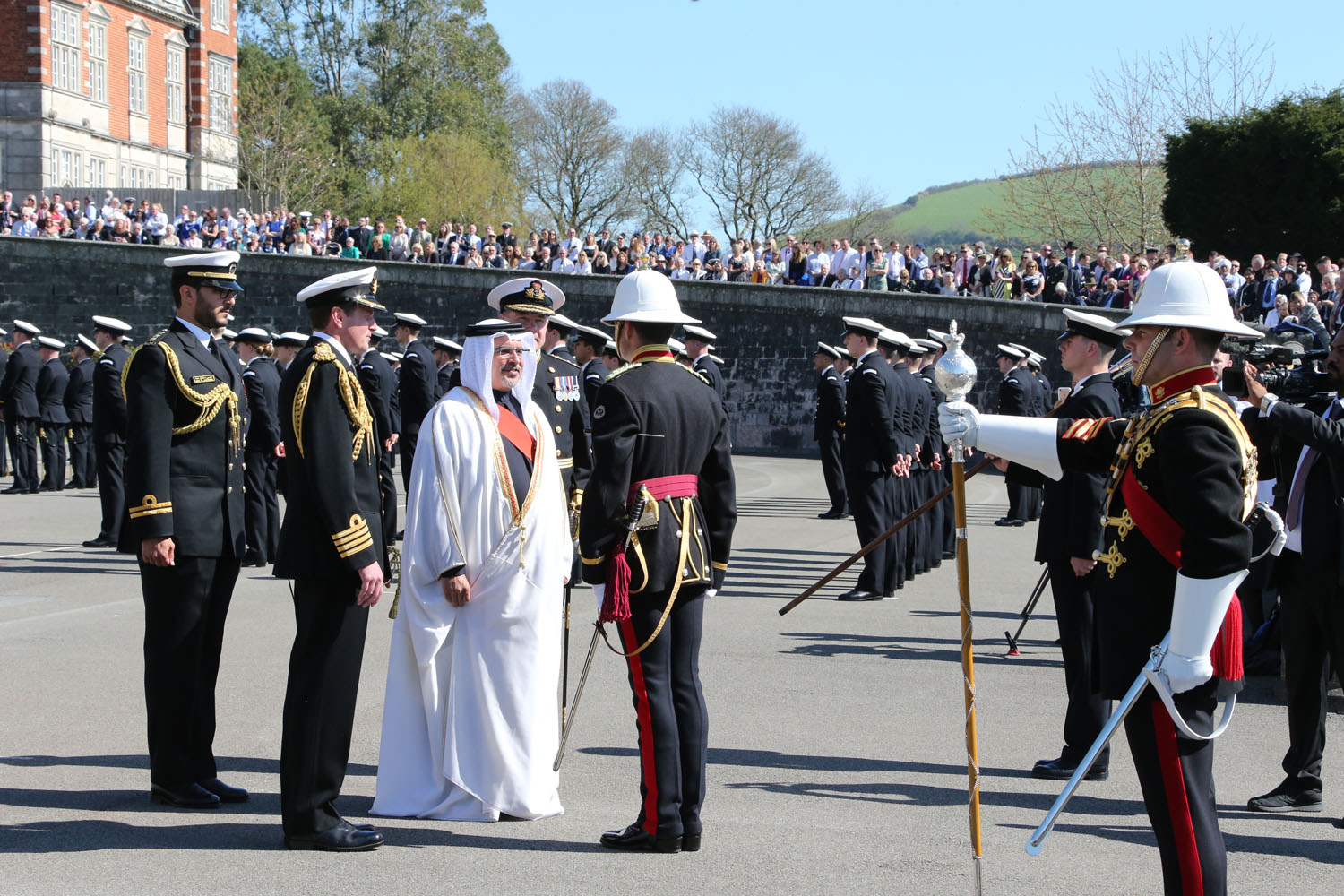
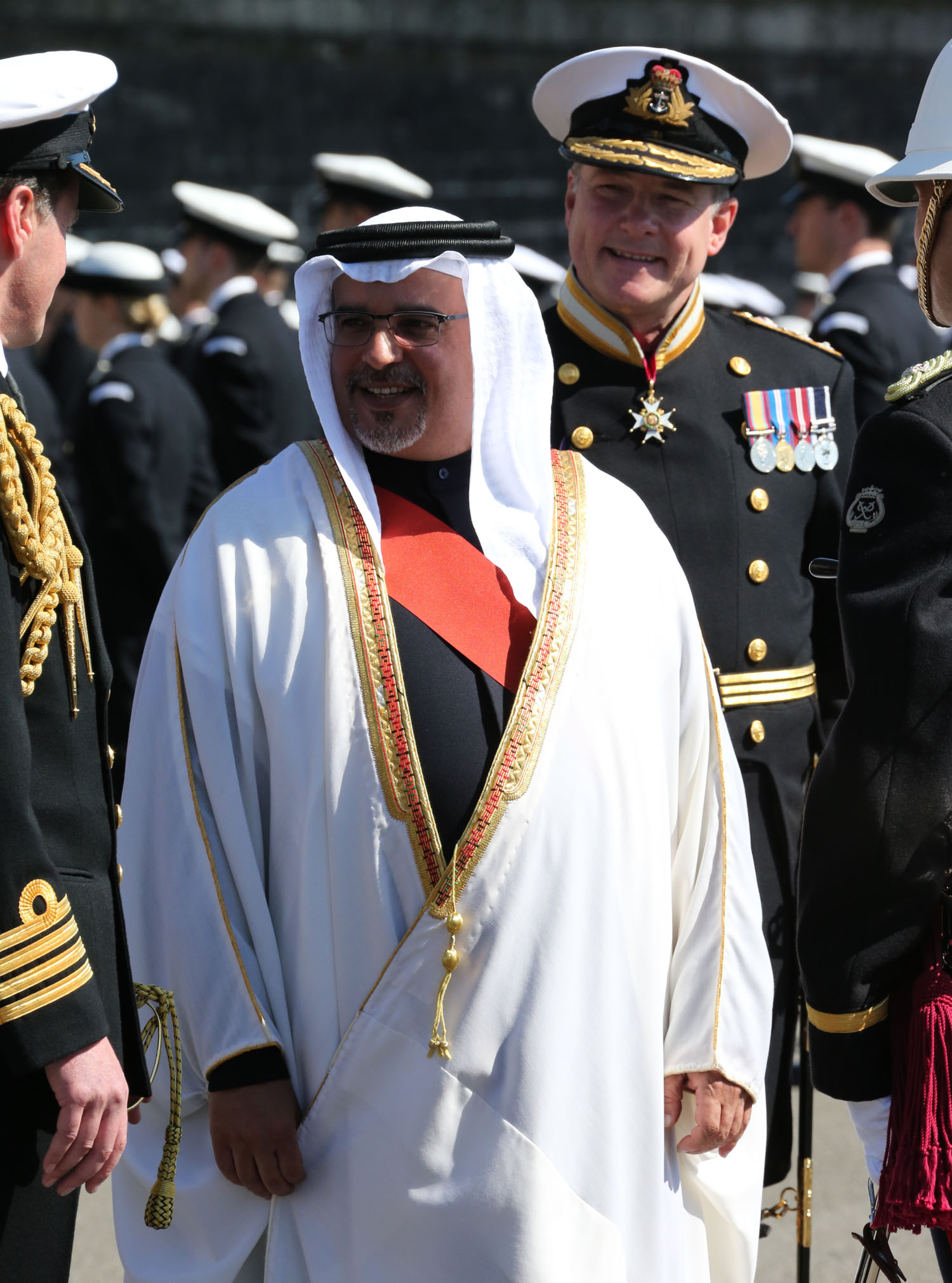
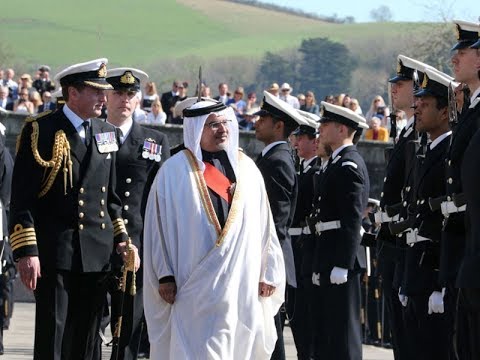
His Royal Highness Prince Salman bin Hamad Al Khalifa, the Crown Prince, Deputy Supreme Commander and First Deputy Prime Minister today attended the Lord High Admiral’s Parade held at the Britannia Royal Naval College (BRNC) in Dartmouth.
His Royal Highness received the salute at the parade, which marked the commissioning of 152 officer cadets. 20 different nationalities were represented, with officer cadets on parade from Bahrain, United Kingdom, Saudi Arabia, Albania, Egypt, Iraq, Lebanon, Singapore and Sri Lanka.
During the Parade, His Royal Highness presented the intake’s winners with prizes and delivered an address in which he congratulated the newly-commissioned officers on the significant achievement of completing their training.
His Royal Highness acknowledged the proud history of the Royal Navy, which has been at the forefront of the United Kingdom’s global role for over four centuries.
His Royal Highness spoke of Bahrain’s long-standing ties with the Royal Navy which span over 200 years, noting that these ties have been further strengthened with the establishment of the new UK Naval Support Facility.
His Royal Highness concluded by praising the Commanding Officer of BRNC, Captain Jolyon Woodard ADC Royal Navy, and all his staff for the tremendous work and support they provided to the cadets during their time at Dartmouth.
Following the Parade, Captain Jolyon Woodard hosted a navy reception during which His Royal Highness met a group of young officers and this intake’s prize winners.
ENDS
Full speech of His Royal Highness the Crown Prince as follows:
Bismillah ar-Rahman ar-Rahim
Deputy Lord Lieutenant, Admirals, Ladies and Gentlemen,
It is indeed a great honour to stand before you, representing Her Majesty Queen Elizabeth II, at today’s Lord High Admiral’s Parade, a signature event in the life of this college and in the lives of those who train here.
To the newly commissioned officers, you have all been tested, both physically and mentally, over the past 30 weeks. From the parade ground to the classroom, from the wilds of Dartmoor to the expanse of the open sea, you all have met the challenges thrown at you, and for which you should now feel an immense sense of achievement and satisfaction.
Congratulations to you all.
You now move to the next phase of your training and, ultimately, your careers within your respective nations’ naval forces. The challenges you’ll face will be varied, they will often be complex and, once overcome, they will be incredibly rewarding. As officers, the responsibility to those under your command will be paramount.
Armed forces demand strong, thoughtful, and considered leadership.
You will often be required to make difficult decisions at a moment’s notice, and to provide motivational leadership at all times. Throughout, those under your care will look to you for instruction, and for guidance.
And your navies will depend upon you for the improvement of the collective, ensuring that talent and ability is both recognised and retained. Leadership will also demand that you place trust in, and empower, your senior ratings. Ensuring everyone is working at their optimum level.
To Captain Woodard, and all of the military and academic staff at this college, who have instructed, coached and mentored you; thank you all for the tremendous work and support you have offered to the cadets during their time at Dartmouth.
To all the parents, family and friends here today, I know very well the upswell of pride you will be feeling. My son commissioned from Dartmouth in 2015, and I, like you, watched the ceremony with an immense sense of joy. Their achievement here is hugely significant and to be forever remembered.
The Royal Navy has a proud history. The oldest of the armed forces, the Senior Service has been at the forefront of Britain’s global role for over four centuries.
It is as relevant to the application of the UK’s foreign policy and international engagement as it ever was, and arguably its importance today, with all of the flux we are seeing in global affairs, is only making its role all the more essential.
And, its new carriers coming into operation will underpin the future of the UK armed forces power projection, which, I believe, is in the interests of all nations seeking a path to stability, peace and prosperity.
That you have all chosen to get your training from Britannia Royal Naval College speaks to the continued mark of excellence of the Royal Navy, and I know there is a great deal of pride held here in you undertaking your training at this college.
I note that there are upwards of 20 different nationalities represented here today, with officer cadets on parade from Bahrain, Albania, Egypt, Iraq, Lebanon, Singapore and Sri Lanka, and of the 152 officer cadet’s commissioning, there are representatives from Saudi Arabia, Fiji, Ghana, Kuwait, Malta, Bangladesh, Malaysia, Guyana, and the Bahamas.
You, undoubtedly, have generated links with each other and within the Royal Navy that will endure throughout your careers.
Speaking for the Kingdom of Bahrain, our own links with the Royal Navy span over 200 years. We are proud that these ties have been bolstered and strengthened with the establishment of its new Naval Support Facility, the Royal Navy’s first overseas establishment for over fifty years.
Navies serve as an essential component of any nation’s security architecture. Through their monitoring and patrols, they can readily identify and neutralise threats and ensure that trade routes remain open and secure. They also stand ready to respond to conflict scenarios and humanitarian missions at a moment’s notice.
The challenges are real, your resolve is in no doubt, this is your time.
Thank you all, and to say once more, to those commissioning today, Congratulations. All my very best to you in your future naval careers.