
Crown Prince: Arab identity values must transcend any segmentations in our societies
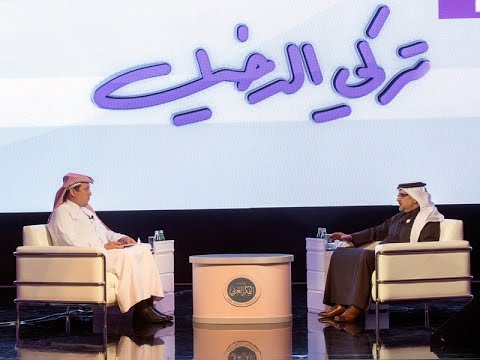
His Royal Highness Prince Salman bin Hamad Al Khalifa, the Crown Prince, Deputy Supreme Commander and First Deputy Prime Minister of the Kingdom of Bahrain, this week attended the 15thFikr Conference, organised by the Arab Thought Foundation, in Abu Dhabi, United Arab Emirates.
The conference, held under the patronage of HRH Sheikh Khalifa bin Zayed Al Nahyan, President of the United Arab Emirates, and in partnership with the Arab League, this year focused on the theme of “Arab Integration: The Cooperation Council for the Arab States of the Gulf (GCC) and the United Arab Emirates (UAE)”.
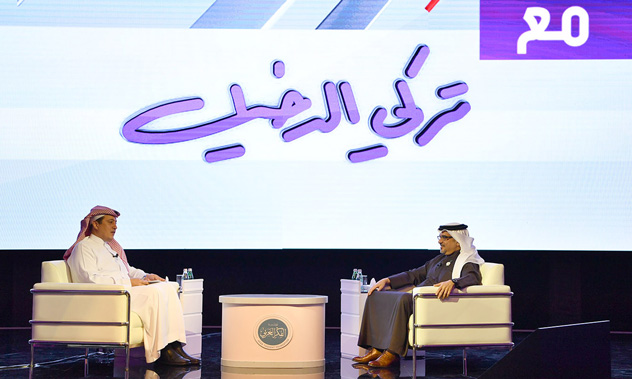
In a special session at the high-level event, His Royal Highness gave a wide-ranging interview to Turki Al Dakhel, the General Manager of Al Arabiya, for his show ‘With Turki Al Dakhel’. The Crown Prince shared his views on Bahrain and the GCC’s significant progress, their respective plans for the future, and the prospects for greater integration in the region, as well as commenting on many other important and topical issues.
The following is a transcript of the discussion.
Transcript: Special session hosted by Turki Al Dakheel, Al Arabiya
Turki: Ladies and Gentlemen. Peace and Blessings be upon you. Welcome once more to ‘With Turki Al Dakhel’ from Abu Dhabi, the capital of the United Arab Emirates. This time we meet for a special episode, from the 15th Fikr Conference organised by the Arab Thought Foundation, which has convened this year under the title ‘Arab Integration: The Cooperation Council for the Arab States of the Gulf (GCC) and the United Arab Emirates’. In this session, we welcome the audience present today in this hall and we welcome His Royal Highness Prince Salman bin Hamad Al Khalifa, the Crown Prince, Deputy Supreme Commander and First Deputy Prime Minister of the Kingdom of Bahrain. Welcome Your Royal Highness.
HRH CP: Thank you and Peace upon you, I welcome the audience here with us today in this hall and the viewers.
Turki: Your Royal Highness, you are known to be realistic and not fond of exaggerations.
HRH CP: God willing.
Turki: Without a doubt, that is what I know about Your Royal Highness. After 35 years of the Gulf Cooperation Council, wouldn’t you agree that most GCC citizens are frustrated with this council, if it is safe to say, because it has not achieved their ambitions?
HRH CP: This is something that pleases me because it is an indication that GCC citizens aspire towards more, and I truly feel the same way – we have to achieve more. Nevertheless, there are many things that have been achieved and maybe some of our successes have been taken for granted, so I would like to highlight what we have achieved. If we take our relationship as six nations under the umbrella of the United Nations as an example, if we only met under this international organisation or even under the Arab League, that would not be right. GCC leaders meet twice a year and our nations meet regularly at a ministerial level, and if you want I can tell you about what has been achieved in the many years after the establishment of the GCC?
Turki: It is important to me to hear what Your Royal Highness considers as real achievements to at least increase many people’s positivity towards this issue.
HRH CP: Firstly, we must focus on the basis of the GCC, which is security. If we look at the joint defence cooperation agreement or the security agreement, they form the fundamentals of defence and security cooperation between our countries. This increases our security, and the area today is not
Turki: Normal?
HRH CP: It is not entirely peaceful – there are dangers – but the men and women of our armed forces receive our thanks and gratitude, they remain vigilant to maintain our security in this time and exchange information. If you want to see a radar image of the movement of aircrafts and ships, you can. We are vigilant and alert of what takes place in the region, that is clear.
Turki: Are you satisfied with what has been achieved in the GCC security and defense domains?
HRH CP: I think at this stage in our development we have achieved as much as we could have.
Turki: So the comparative security of the GCC countries in such a turbulent region is considered an achievement of the Council?
HRH CP: The next most important thing, God willing, is to develop a defensive shield against ballistic missiles and it is necessary that this be achieved as soon as possible.
Turki: Is this being worked on?
HRH CP: Yes, this is being worked on. This is a major priority. Then there is the movement of citizens. Many of you remember that we use to travel with our passports. We have now cancelled visas and travel is enabled with our ID cards. You might view this as a small change but it is a substantial achievement, and more is required.
Turki: The GCC Citizen, Your Royal Highness, looks towards a similar experience to what has happened in Europe. Is it necessary that I stop between one country and the other and take out my ID and the customs officer inspects my bags or can we reduce these processes?
HRH CP: If a Customs Union is achieved, and the GCC immigration authorities are linked, then this will take place.
Turki: Is that something achievable? Is there a study?
HRH CP: I mean one of the great achievements we have made in the GCC is capping the percentage of customs duties. The percentage of customs duties in the Kingdom of Bahrain was 20%, the highest rate today is 5%. Defense and security agreements may not be felt by the citizens directly, but the movement of people is felt, and what is also felt is this integration in customs duties. The next phase, God willing, will involve a customs union. This is required and we do not call it a union, but we call it the alignment of immigration authorities and the technologies of immigration – perhaps at some point even a unified visa, such as the Schengen visa issued in Europe, that we would issue for expatriates.
Turki: In GCC Countries?
HRH CP: In GCC Countries.
Turki: This means every GCC citizen within the six GCC countries?
HRH CP: No, each expatriate that wishes to enter, enters with one visa for all the GCC countries. This is the wish that, God willing, we achieve.
Turki: Beautiful, Beautiful. Your Royal Highness Prince Salman bin Hamad bin Isa Al Khalifa Crown Prince of Bahrain, diplomatically, did the GCC succeed in making the world look towards it as one entity, as one position?
HRH CP: I see this phenomenon increasing more and more. If we see the way major countries or international organisations address us, they always address us as a bloc. If there is an important meeting, we are all invited, the six countries together. This did not happen in the past.
Turki: Like Camp David for example?
HRH CP: Like Camp David, exactly, this is a positive indicator, so I believe yes
Turki: So you have succeeded in interacting as a single diplomatic entity, to a large extent?
HRH CP: It has its weight.
Turki: Better than before?
HRH CP: Yes, much better.
Turki: But you desire to achieve more?
HRH: Of course. But I repeat, at this stage we want to build the GCC from the base, because building a system hastily makes it fragile after 20 years. If structured right and built in accordance with common interests and unified the laws and concepts, all of these things are solved. If you look, for example, to our dealings with the Security Council, we are dealing as a unified, co-operative council.
Turki: So you negotiate on Security Council issues as one bloc?
HRH CP: On the important issues, yes, there is full coordination.
Turki: All six countries?
HRH CP: Indeed, all six countries, on the important issues
Turki: What about if you were to gather as a group, and there are those that are reserved or disagree on the position. Would you leave them and continue? Is this an issue for the Council?
HRH CP: We are countries that cooperate, this is a cooperation council. It is only natural that there are differences in views on occasions.
Turki: That is natural.
HRH CP: It is natural, but what makes me comfortable is that there is rarely a difference in the overall goal, only occasionally in the means of achieving that goal, and that does not worry me.
Turki: Your Royal Highness, on the economic side, what has been achieved for the GCC citizen that is tangible?
HRH CP: He can travel without a passport, and own real estate in any one of the six countries, and own companies for the first time. When I was young, there were no companies that I could really name as GCC companies. Today if we look, we can see that there are companies from Kuwait that work in Saudi Arabia, Bahrain and the UAE. There are Emirati companies that work in the Saudi Kingdom and in Bahrain, there are Bahraini companies working in the UAE and Kuwait. I believe there are around 40,000 commercial registrations for GCC citizens in other GCC countries.
Tukri: The total of commercial registrations that are registered in other GCC countries is 40,000?
HRH CP: Roughly.
Turki: Are there any other achievements?
HRH CP: Economically?
Turki: Economically.
HRH CP: I see the common ceiling for customs as a great achievement because of the quota system. Under the old system, when a product was expensive in Bahrain and cheap in Saudi Arabia, it ended up being bought in Saudi Arabia and sold in Bahrain. This practice is prevented now.
Turki: So there is a unification in the price of goods through their import?
HRH CP: Exactly, Exactly.
Turki: Good.
HRH CP: We can speak about the electricity grid and we can speak, God willing, about the water grid.
Turki: What is the electrical grid?
HRH CP: The electricity grid means that if there is demand or a shortage of electricity supply in any country for any reason – in the middle of the summer for example where the demand is high – the country can obtain power from the neighboring country, through a linked system.
Turki: Electricity has almost become a unified organisation in all the countries?
HRH CP: Not an organisation, a unified network.
Turki: A network?
HRH CP: We can exchange electricity according to supply and demand to prevent interruptions. I remember 15 years ago, every summer there would be power cuts in the Kingdom of Bahrain, and now there are none.
Turki: In all GCC countries?
HRH CP: Now they are over.
Turki: Because of the high temperature and the high voltages.
HRH CP: The high temperature, the high usage and increased demand of electricity puts pressure on the convertors and they get cut.
Turki: We move to a break Your Royal Highness, a short break and then we are back to continue our discussion with His Royal Highness the Crown Prince of Bahrain with Turki Al Dakheel, stay tuned.
Turki: Welcome back ladies and gentlemen with Turki Al Dakheel, in this special episode which we are presenting on the sidelines of the Arab Thought Conference, with His Royal Highness Prince Salman bin Hamad bin Isa Al Khalifa, Crown Prince, Deputy Supreme Commander and First Deputy Prime Minister of the Kingdom of Bahrain. Your Royal Highness, we were speaking about the electricity grid as one of the GCC achievements you mentioned, even though you said that ambitions are even bigger. What about a water grid Your Royal Highness?
HRH CP: This is something very important and it is coming, God Willing.
Turki: Similar to the electricity grid?
HRH CP: The same idea.
Turki: So that if there was a deficit in one country, it can be funded
HRH CP: it can be funded by another country
Turki: If there was a shortage in Bahrain, it could be supplied by Qatar or Saudi Arabia?
HRH CP: From Qatar and Saudi Arabia
Turki: and vice versa?
HRH CP: Yes.
Turki: Your Royal Highness, do you think the necessary steps are being taken to reach a Gulf Union? Has the Gulf Union become necessary today, as the importance of the formation of the GCC was during the 80’s? As you all say that the system is a strong and solid system, in which six countries depend on
HRH CP: The idea of the Union has evolved over the years and with much deliberation. As I mentioned, we will not rush into it. If we build a solid foundation, with strong systems and laws and joint programs and projects, I hope that the Union commences smoothly overnight.
Turki: Given that there is action on the ground and thus the Union then commences
HRH CP: Commencement is guaranteed. I will give you an example: today, some viewers may ask, what have we benefited from the formation of the GCC; we mentioned customs and free movement, electricity and lack of power outages, but I also want to mention healthcare. Today, all six countries buy medication collectively, which lowers the price, and God forbids but everyone needs this
Turki: It is a necessity
HRH CP: for the prices to be reasonable, we have treated hundreds of thousands of Gulf nationals within the GCC.
Turki: Are Gulf nationals able to get health treatment in any other GCC country for free? Just like its nationals do? For example, can a Saudi person get free healthcare in Bahrain?
HRH CP: Of course! Exactly like a national, this is at least the case in the Kingdom of Bahrain.
Turki: God willing, citizens do not require it.
HRH CP: God willing they don’t need this, but if they do, it is available.
Turki: Ok.
HRH CP: And, of course, there are projects for the future.
Turki: Your Royal Highness, the Gulf’s infrastructure is the backbone of development: economic development, social development, movement of trade, and of course, infrastructure impacts various aspects of life. Is the GCC working as a system together on this, or is every country working separately on its infrastructure? Is there coordination, or is every country working on this separately?
HRH CP: I’ll give an example, and I’d like to speak with figures not just with words.15 years ago, two way trade was nearly $15 billion dollars. Today it has become over $115 billion dollars.
Turki: Was that before 15 years ago?
HRH CP: 15 years.
Turki: 15 billion?
HRH CP: It has now become 115 billion.
Turki: Dollars?
HRH CP: Yes, 115 billion dollars. Which means that there is a correlation between the infrastructure development and two way trade. The more we develop infrastructure, the greater the intra-regional trade and that’s the goal. Let us call it good competition, if we build airports, or ports or streets or bridges, this all helps.
Turki: You are all competing, but positive competition?
HRH CP: Of course, competition is important, and whoever does not compete lags behind.
Turki: Inactive
HRH CP: Yes, they fall behind. As an example of an upcoming infrastructure project, we are building a railway which will help transport goods and passengers.
Turki: Your Royal Highness, a railway. When will a person be able to purchase a ticket and ride the train you have all been talking about for the past twenty years?
HRH CP: I will not give you an exact date, as the date can change. However, I expect over the next ten years.
Turki: There has also been discussion, after the visit of the King of Saudi Arabia to Bahrain, that there was an agreement between King Hamad and King Salman on the study of a new bridge. What is the idea of this new bridge Your Royal highness?
HRH CP: The new bridge is a response to the need. We have a huge demand for the movement of people and goods. The waiting time at King Fahd Causeway is long during the weekends and official holidays, and we also do not want the goods we receive from Saudi Arabia to be delayed and vice versa.
Turki: News has it that the study and funding of the new bridge will come from the private sector.
HRH CP: We will study the possibility of the “Build, Operate, Transfer” BOT system. The idea is simple, as we set out the course, and guarantee international companies will receive approval for building the bridge and then they build it. They receive revenue until they cover their costs, and then they hand over the bridge.
Turki: Are there any companies ready to work on this?
HRH CP: Yes, we have expressions of interest from companies in the Gulf, Europe, Turkey and China. There is progress.
Turki: Your Royal Highness Prince Salman bin Hamad Al Khalifa, Crown Prince of Bahrain, I would like to ask a question that is on the minds of citizens of the GCC, what are the obstacles to the Gulf Union? What needs to be done, in order for us to wake up one day and see an existing Union?
HRH CP: I do not consider them as obstacles, but rather a natural evolution. We have an international example with the European Union, for decades – maybe 60-70 years – and then they founded the Euro, and that was the peak of union. The union did not occur from countries giving up their sovereignty
Turki: The Union does not require a country to melt into another
HRH CP: Exactly! However, it means the features of the full Union – a united currency, army, foreign policy. The currency in Europe is currently under threat, and the UK withdrawing from the European Union.
Turki: The United Gulf Currency
HRH CP: Its coming God willing
Turki: Riddled with a lot of difficulties?
HRH CP: Of course, our currency is almost unified because we are linked
Turki: With the dollar
HRH CP: Yes, with the dollar. However, if we are to adopt a single gulf currency policy, we would have to establish a central bank. The unified central bank would adjust borrowing percentage from each country. European countries had an obligation not to increase by 2%- 4%
Turki: in borrowing..
HRH CP: .. in borrowing.. that is, they do not allow the deficit to increase from 2-4%. I think if they surpass this percentage, it has made the ECB or the European bank suffer from policies of various countries, and we do not want to reach this level. We need to use this as an example and learn from this experience. We do not want to get to that point. We need time in order to settle economic matters, and for institutions to develop, and for cooperation between central banks to commence. Look at America, everyone thinks they have one central bank, but they have 12.
Turki: In America?
HRH CP: Yes, in America. And they have a council that coordinates between the banks. Perhaps this is an example we can imitate.
Turki: Okay, Your Royal Highness, in your point of view, what are the pressing challenges faced by the GCC and the GCC countries?
HRH CP: The security situation remains a major challenge, and we must cooperate and unite to repel any external interference so that we do not get affected like other Arab countries have. In fact, I am saddened at the sight of what is happening in some Arab countries.
Turki: The reality of some of the Arab countries?
HRH CP: The reality of some of the Arab countries today is very sad. It has become what it is because of the disintegration of the foundations of the states itself, which has caused sectarianism, ethnic differences, hatred, instability, chaos and eventually war which is what we see. And bigger nations have their own say in those matters and are competing about who has a bigger influence over these countries, and unfortunately innocent citizens are paying the price.
Turki: Your Royal Highness on your remarks about the rise of sectarianism and division across the region, what do you think should be done to prevent such ideologies from spreading across the region?
HRH CP: In a nutshell, I think the solution lies in promoting national identity – or Arab identity if you will – such that we commit ourselves to serving a much bigger, more compelling cause than race or ethnicity.
Turki: So citizenship will serve to reduce sectarianism in the region?
HRH CP: Indeed, but it is part and parcel of embracing our Arab identity, albeit not the way it had been used
HRH CP: Let me now put it in perspective: we speak the same language and share the same culture yes, historically the region has enjoyed religious diversity
There is something else I would like add the role of religious leaders must be confined to religious affairs. Unfortunately, the role of clergy men has extended to other affairs put it like this: if somebody is ill would he/she go to the doctor or the cleric?
Turki: Well, some are ill and still insist to go to religious leaders
HRH CP: Exactly. If somebody is ill he/she must go to the doctor; if someone is seeking financial advice he/she must go to the banker; if somebody is after a defence-related advice he/she must go to a defence affairs expert.
Turki: And if somebody needs a religious advice; should they reach out to a cleric?
HRH CP: Yes, of course. Religion is paramount to humanity – we are all Muslims – but Muslims feel betrayed when Islam is being purged from its original values and principles.
Turki: So, you feel hurt when you see Islam being politicised?
HRH CP: Yes, of course, when Islam is being politicised.
Turki: GCC youth now make up more than 60% of the entire GCC population. Tell us about some of the development plans targeting those under the age of 30?
HRH CP: Our foremost priority is to provide high-quality education. We also place great importance on empowering youth and building an economy that continues to grow and foster innovative opportunies for our youth. A growing economy will embrace them all and it is important to dissolve any structural problems that would result in barriers to enter the market, and that is important to us.
Turki: So Education, empowerment, and open markets are the three main pillars of youth development?
HRH CP: Yes, indeed
Turki: And creating opportunities?
HRH CP: Yes, in addition to an open market.
Turki: Can you elaborate Your Royal Highness?
HRH CP: Yes, the welfare system is not sustainable. We are committed to increasing competitiveness, openness and fairness across key sectors. This will help create high-value opportunities for Bahrain’s youth. However, if we think that with one decision we can implement everything, which is incorrect. We can through a decision, will be able to facilitate this environment.
Turki: Your Royal Highness, we are going to have a short break. Ladies and gentlemen, please stay with us as we resume our conversation with HRH CP.
Turki: Ladies and gentlemen, we are honoured to present you with a special serial at the 15th Fikr Conference, where we host His Royal Highness Prince Salman bin Hamad Al Khalifa, the Crown Prince, Deputy Supreme Commander and First Deputy Prime Minister of the Kingdom of Bahrain to talk about regional politics.
Your Royal Highness, a few day ago, the British Prime Minister Theresa May attended the 37th GCC Summit in Bahrain as a guest of honour. Your Royal Highness, we want to hear from you about the private sessions that the British PM Theresa May attended during the 37th GCC Summit. Did she say anything intriguing behind closed doors?
HRH CP: Nothing in indifferent from what you have heard in her address
Turki: Indeed
HRH CP: The PM’s speech was strong and truly representative of the UK’s commitment to build on existing cooperation and historic ties with its allies. Equally important, the British PM also shed light on key regional issues, specifically the importance of aligning regional and international efforts to protect regional security, and ensuring neighbouring countries engage in diplomacy and positively contribute to regional issues. And we welcome this, particularly the commitment to work with everyone
Turki: Your Royal Highness, in her speech, the British PM was clear that the GCC’s security is as important as Britain’s security.
HRH CP: Exactly
Turki: Do you have any comments on this? And are we witnessing a positive change in the UK’s foreign policy towards the region? Perhaps a more keen approach than the previous British government?
HRH CP: Bahrain and the UK have consistently enjoyed strong ties for more than two centuries. Our priorities are now more focused on achieving shared goals and promoting our shared values. Additionally, there is a common understanding in Europe that their security is directly linked to ours – globalisation made the entire world interconnected.
Turki: How does Bahrain – alongside its GCC partners – see relations with the UK, considering that Bahrain and the UK have marked 100 years years of bilateral relations this year?
HRH CP: Actually 200 years of bilateral relations – since 1816.
Turki: Yes, 200 years.
HRH CP: Our relationship with the UK is historic and firmly built on shared values. The UK continues to play a pivotal role in the international arena as a permanent member of the UN Security Council. We are committed to building on and expanding our mutually beneficial relations with the UK, as well as other international allies.
Turki: Do you see Brexit having a positive or negative impact on UK?
HRH CP: Let’s wait and see how Brexit pans out. The UK is assessing and evaluating all options to protect its interests, and the UK is keen and determined to broaden cooperation with its international partners, including the GCC, which is recognised as the third largest market in the world after the US and the EU.
Turki: The UK PM requested further economic cooperation between GCC Countries and the UK, will the GCC, as a collective economic power, act as a substitute for the EU in terms of commercial cooperation?
HRH CP: I would describe the GCC as the UK’s partner, rather than the EU’s substitute.
Turki: A parallel partner, Your Royal Highness, please tell us your thoughts on President-elect Trump and the US elections.
HRH CP: Mr. Trump has yet to officially become the US President. It is rather difficult to make an informed judgement at this stage.
Turki: He’s almost President.
HRH CP: True, but he still hasn’t been sworn in as the US president. He has appointed his transition team, which we know.
Turki: So Bahrain has good relations with Trump’s transition team?
HRH CP: Yes, and we know their positions and stances
Turki: Has there been any collaboration in the past with members of the transition team?
HRH CP: We have previously worked with the Defence secretary. Other new appointees, including the Secretary of State – the Foreign Secretary – have good relations with GCC leaders
Turki: Based on this previous collaboration, would you say they are positive?
HRH CP: Yes.
Turki: So previous collaboration was good?
HRH CP: Yes.
Turki: And this must be a good thing for you?
HRH-CP: God willing
Turki: Do you think it is positive?
HRH-CP: God willing
Turki: Are you optimistic about President-elect Donald Trump?
HRH CP: I am always optimistic about the US.?
Turki: So, were you optimistic about the US during Obama’s presidency?
HRH CP: If you look at the history of US Foreign Policy in the Middle East, you will find that there has been mistakes. However, history also shows that such mistakes are not embedded within the overarching policy towards the region. On the contrary, they are the direct result of certain policies or administrations. I think the situation will see a positive change.
Turki: But Obama’s approach to the region has not been so optimistic?
HRH CP: We had shared our concerns with the US Administration. We were keen to prevent the negative impact resulting from a detached and dispassionate US foreign policy in the Middle East. And even under the administration that came before Obama, this approach has taken its toll on public opinion and led to a new realisation about foreign intervention and policies.
Turki: So he has been too closed and disinclined to make positive contribution outside the US?
HRH CP: Yes, perhaps too closed.
Turki: More than he should?
HRH CP: Exactly
Turki: Your Royal Highness, I sat with you almost ten years ago in Bahrain during the Sixth Fikr conference. 10 years ago we spoke about Bahrain’s economy and path to prosperity and you were extremely optimistic, particularly with respect to the introduction of improved frameworks aimed at facilitating international investment in the country. My question is: how do you see Bahrain’s economy at this point in time? After 10 years of progress and the 2011 events?
HRH CP: Bahrain’s economy has and continues to grow in spite of the complex challenges that we had to face. This is evidenced by the growth we continued to achieve, even in 2011, we were able to grow, even though at 2.1% rate.
Turki: Even 2011 saw economic growth in Bahrain?
HRH CP: Yes
Turki: What was the rate of growth in 2011?
HRH CP: Approximately 2%
Turki: In terms of economic growth, what is the ideal growth rate that is being pursued, which doesn’t drive up inflation rates?
HRH CP: Between 3 and 6 Even 8
Turki: Do you thing achieving 8 would have a positive impact on the economy?
HRH CP: Gradually when the policies have matured, we can reach 8.
Turki: You mean economic policies?
HRH CP: Bahrain has seen a significant change over the past 10 years – since 2006.
Turki: And the reason behind this change is determined efforts to advance development and infrastructure?
HRH CP: Yes, through development and sustained growth, the average income of a Bahraini family has risen by 47% in the last eight years.
Turki: A 47% increase in the average income of a Bahraini family?
HRH CP: Yes.
HRH CP: To be more precise, since the launch of Bahrain’s economic vision, the average income of a Bahraini family has increased by 47%.
Turki: Can you tell us about the primary goals of Bahrain’s economic vision? Does it continue to see progress?
HRH CP: Yes, it continues to see significant progress, but we have more ambitions that we want to achieve through growth-oriented initiatives.
Turki: Has the vision faced any challenges that prevented it from progressing?
HRH CP: The vision is on course and continues to drive positive change across the country.
Turki: What would you like to tell GCC citizens and Bahraini citizens at this special moment?
HRH CP: When we first announced our economic vision, we were clear from the outset that we wanted to deliver a 100% increase in the average income of a Bahraini family. We have now achieved 47%.
Turki: What was the timeframe to reach 100% increase?
HRH CP: Our target is 2030. That is not important, the important part is that we are heading in the right direction. Currently, in 2016, we have achieved 47%, we could reach 100% before 2030
Turki: Before 2030?
HRH CP: Yes, before.
Turki: The role of Bahrain’s citizens is obviously crucial to achieving the vision’s goals. How do citizens’ contribute to achieving these goals?
HRH CP: Our vision is built upon the principles of competitiveness and fairness. These are vital tools to meet citizens’ needs and aspirations. A central planned economy can no longer meet our ambitious goals of development, which prioritise citizens’ needs and aspirations.
Turki: Has Bahrain moved beyond the central planned economy?
HRH CP: Many achievements attest to the significant strides Bahrain has made in innovating and developing its economy. Over 64 reforms have been introduced across a wide-range of areas, including the labour market, private and public sector governance, and banking, in addition to other privatisation initiatives within the telecommunications, electricity and energy sectors and ports.
Turki: Would you say that Bahrain has met its ambitious development goals?
HRH CP: We have laid down the foundations for a sustainable economy The rest is defendant on you.
Turki: So is it fitting to conclude that Bahrain has built a conducive economic environment for investment and long-term growth?
HRH CP: Yes., very conducive
HRH CP: And if there are any problems that should be raised, anybody is welcomed to my majlis.
Turki: Thank you very much indeed, Your Royal Highness.
HRH CP: Thank you, and thank you everybody for listening.
Turki: Ladies and Gentlemen, Thank you and until we meet again in another episode of with Turki Al Dhakheel, may god be with you and his peace and blessing be upon you. Thank you for listening