
US-ARAB Forum

Thank you Carlie for your generous introduction and for your perceptive and very insightful remarks.
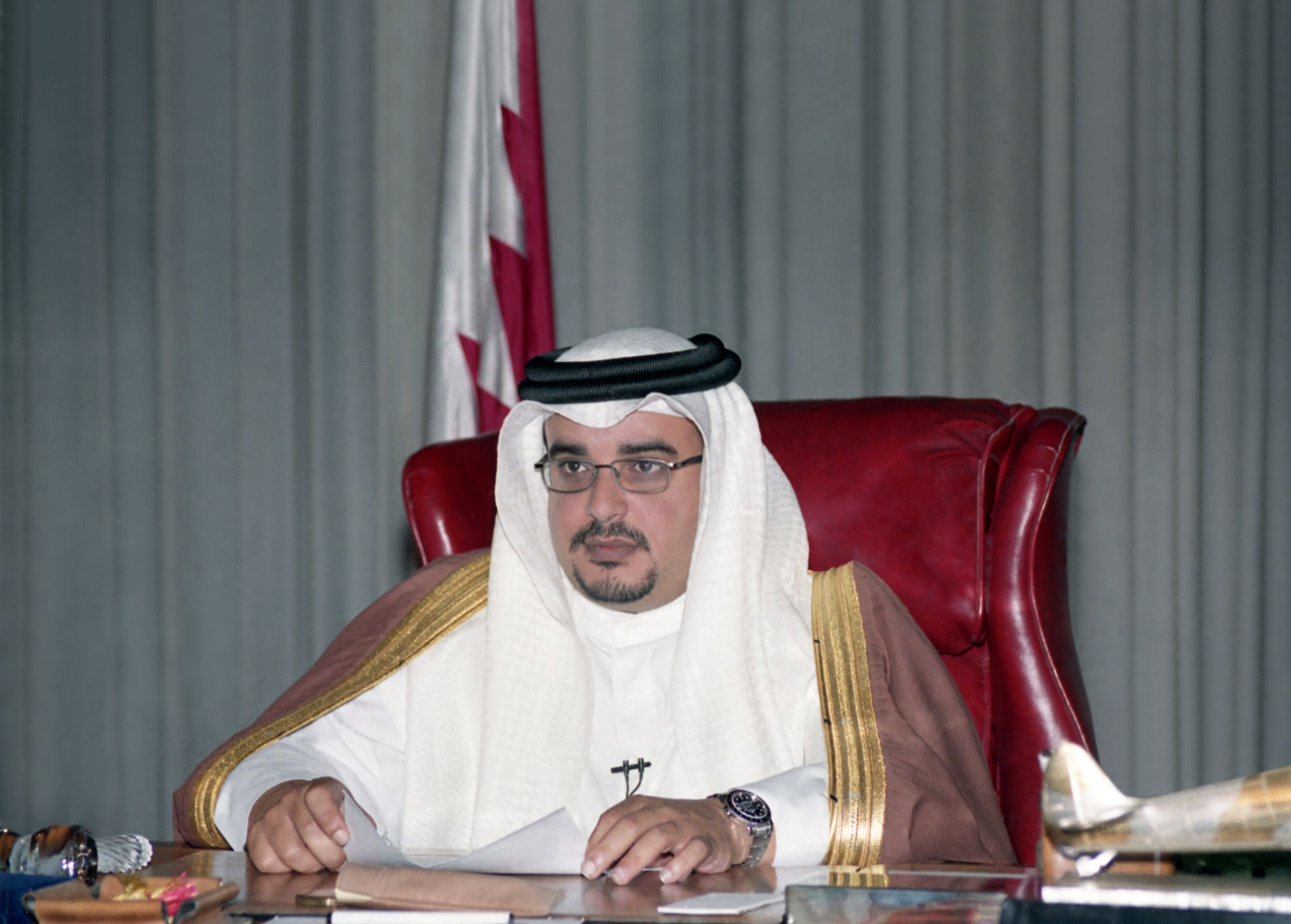
Distinguished guests, ladies and gentlemen. I am sorry that I could not be with you today in person as I had been greatly looking forward to, but unfortunately, unavoidable commitments have kept me in Bahrain.
Nevertheless, I am pleased that through the satellite link you were able to illustrate how close the Arab world and the United States are in the modern and inter-connected world. I would like to start by thanking the organisers of this forum, the US Arab Chamber of Commerce, for their outstanding efforts in putting together such a fantastic gathering. Ahmed Shabbani, Sam Hamdan, Nasser Baidoun, have, I know, worked extremely hard to make it happen. I would also like to thank all of you for taking the time to support the forum, an event that we feel is more important today than ever before, particularly, in light of the current economic and political situation.
As the forum theme suggests, there is little doubt in the immense opportunities that exist in the ties between the Arab world and the United States. Both sides have an enormous amount to gain from expanded economic, commercial, and financial ties. And to date, we have only scratched the surface in terms of the potential benefits that we can jointly reap, particularly, on the security front. At the same time, President Bush, has made clear the United States’ determination to integrate Arab countries more closely into a world system of free trade and in particular to develop closer economic links between the US and the Arab world.
The President’s address to the University of South Carolina on May 9th set out his vision of a US Middle East free trade area to put this determination into practice. And as an example of this, the United States and Bahrain are shortly to begin negotiations towards a bilateral free trade agreement which we hope to see signed soon after. The framework is therefore in place. The planning has been done. The foundations laid. In order to fully realize this potential however, I believe we must address the obstacles that exist to closer US-Arab links. And consider from a political perspective, what each side can do to overcome these obstacles. On the one side, there is little doubt of the need for reform, economic and otherwise in the Arab world as Carlie you so clearly articulated.
September the 11th was not only a human tragedy of immense proportions, it was also a clear wake-up call to us in the Middle East regarding what we have done with our societies, and whether we have been able to provide genuine opportunities to our people. Opportunities that can promise them a hope of a better life, with better jobs than their parents, and better prospects for their own children. Moreover, Arab countries are generally perceived to suffer from overregulation, inefficient legal systems, complex and restrictive commercial and investment laws and a host of other factors that are seen as stifling investment and economic freedom. The underlying problem is that most in the Middle East are still struggling to determine the appropriate socioeconomic political model within their own countries, that will provide all stakeholders with sufficient vested interests in determining their own future, and that is what we need to address.
My country, Bahrain, has already taken significant steps in this direction both politically and economically. On the political level, recent years have seen overwhelming popular approval in a referendum on Bahrain’s National Action Charter and a revised constitution based on that charter. As a result, Bahrain has a bicameral national assembly with real powers, and last year witnessed both municipal and national elections in which women both voted and stood as candidates.
Bahrain’s legal system is now more effective, transparent, and independent than ever before. Following the establishment of the Constitutional Court, the Supreme Council for the judiciary, and an independent Attorney General’s office, civil society continues to develop apace and the number of non-governmental organisations, labour unions, and professional bodies continues to grow.
However, it is not enough for me to sit here and tell you about what Bahrain alone is trying to do. The task of building the infrastructure for a fair and equitable civil society is one the Arab world needs to address together. Here too, it is clear that the challenge is being met and around the region action is being taken in a range of fields. From deregulation to education. From security to institutional reform. Countries in the Middle East have taken significant steps on this road. Some have recently held parliamentary elections, others a national referendum on their future. Broader developments for example in economic and educational systems are also taking place. These then are the measures that need to be taken, are being taken in the Arab world, with the goal being to bring a better life to our own people.
On the American side, the challenge is quite different. From an Arab perspective the challenge for the United States is to change how it is perceived among the majority of the Arab population. The United States has long been a friend, and has been closely involved in helping develop this region for a significant portion of the last century. In our world today though, there are two lenses through which we attest the results of the US policy. The first is the Palestinian-Israeli issue. The second is Iraq. The Palestinian-Israeli issue is an old and sensitive one. I do not wish to do it injustice at the intricate complexity of the situation by suggesting that a solution is just around the corner, but I would like to stress that the only sustainable outcome in the long run is a just one. A solution that is based on two viable states that can live in peace and economic prosperity. Policies of fence building, assassination and terror are neither justifiable nor sustainable on either side. And served only take us further from a genuine and lasting peace. We must recognise the whole process of peace is in crisis, and that ambivalence is not an option.
While we recognise the Arab world has not done enough to condemn the use of terror or to convince ordinary Israelis that we are serious about peace, we believe that the Israelis have used every opportunity to stall and delay implementation so that they can change the facts on the ground. This is not a time for photo opportunities, empty words, or decisions without consequences. This is a time for strong American engagement. Prior to the latest collapse, we have seen how strong American political and economic pressure forced the reluctant Palestinian authority to engage in much needed reform.
However, the reforms are stalling. We believe that the use of political pressure alone on the Israelis to honour their commitments is not efficient. It is a high time to insist that economic aid to Israel be tied to a freeze on illegal settlement buildings. Your tax dollars need to be spent on building bridges of friendship, not walls of division.
The second issue is Iraq. We all need Iraq to succeed. We all want a better future for Iraq, and we all feel the pain of what the Iraqis have had to deal with under the Baathist regime. It is incumbent on all of us to do all that is necessary both to rebuild the physical infrastructure of the country and to ensure the emergence of a genuinely representative constitution and political system that can lead Iraq to a stable and prosperous future it so richly deserves. The commitment that the United States has undertaken must be seen through a successful reconstruction of Iraq, and Iraq is much bigger than the country alone, and has enormous implications on the security of both the Middle East and the United States. We appreciate the commitment and the sacrifices made so far but believe that this is an issue of such importance that it cannot be left unfinished.
The Arab population is watching these two issues unfold on a daily basis through the internet and on television. Ordinary Arabs identify with the plight of both Palestinians and Iraqis and look to the United States to ensure a just outcome and an end to the suffering of fellow Arabs. Indeed, the greater the perceived American power and influence on these issues, the greater the disenchantment with the United States when it is viewed as failing to bring about an equitable outcome. There can be no room for double standards in a comprehensive Middle East policy. It is a well-recognised paradox that while ordinary Arabs identified closely with core American values such as democracy, freedom, justice, and transparency, and indeed want to see faster steps towards implementing such values in their own societies, the same people routinely view American policies in the region with suspicion. Therefore, little doubt there exists a significant undercurrent of support and friendship for America and its values. But until the US can effectively change popular perception of its policies and motivation, the full potential of regional economic opportunity will continue to be out of reach.
Ladies and gentlemen, I hope I have not been too gloomy in outlining the challenges we face. I genuinely believe that the Arab world is ready and willing to see strong and sustainable development in its economic ties with the United States, and that if these ties are to reach their full potential we must not shrink from addressing the political and social obstacles that lie in our path. Equally, I am convinced that the will exists on both sides to work together to tackle such issues and that our commitment to addressing these challenges will enable us to take full advantage of the opportunities that undoubtedly exist on both sides.
As governments though, we can only work at the political level, and the real work of turning policies into achievements, and winning hearts and minds among politicians, business leaders and ordinary people will largely fall on the private sector and on non-governmental organisations. In the United States of course, Arab countries have the advantage of the sizeable influential Arab-American community. Through the trials and tribulations of recent years, this community has consistently lived up to the finest American ideals being among the leaders in innovation and high-tech industries. Being patriotic Americans in the best sense of the word, while remaining proud of and true to their Arab heritage. Although it has undoubtedly suffered from the events of September the 11th, this community is a shining example of the potential of the Arab world and the Arab individual. And it is our hope that Arab-Americans will continue to play an ambassadorial role in promoting inter-cultural and inter-civilizational dialogue, and in raising awareness of the true face of the Arab world and the tremendous potential that exists for the development of its ties with the United States.
Ladies and gentlemen, may I therefore close by saying the United States and the Arab world share a range of common values and ideals. We both cherish individual rights, freedoms, and opportunities. We both believe that the surest route to prosperity is through the empowering of the individual and removing barriers to business. We share a vision of a future in which security and stability will enable our children to work together peacefully to resolve their differences and in which everyone can benefit from the freedoms we hold so dear.
Through all the difficulties we may encounter, I am convinced that these shared bonds will ensure that the economic links between us will continue to grow and that through such ties we can spread prosperity, development, and friendship among the peoples of both sides.
Thank you