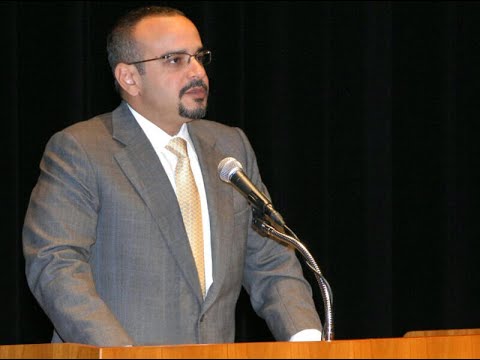

Waseda University, Tokyo

Your excellencies, professors, ladies and gentlemen; good morning.
Thank you all for your kind welcome. In particular I would like to thank President Katsuhiko Shirai and His Excelleny Tsutomu Takebe for extending the invitation to join you here today.
We find ourselves meeting in challenging times. Around the world, the impact of a global downturn is being felt – increased uncertainty, market turmoil, plummeting property prices, rising redundancies. What began last year as the sub-prime mortgage crisis, then became the ‘credit crunch,’ has now developed into a situation that Warren Buffet has referred to as ‘the biggest financial meltdown in American History’. The impact of this crisis is already being felt in other markets – in the UK, Germany and Belgium central banks have stepped in to ensure the solvency of major financial institutions.
It is certainly evident that many nations are struggling. I know that times are tougher than they were just a few short months ago. But we should not forget that the world is not the same place it was 80 years ago, when the Wall Street Crash led to the Great Depression. Nor is it the same place as it was 12 years ago, when the Asian Financial Crisis hit closer to home. It is not the same.
Our global economy is evolving; power has shifted. It is no longer centred in one or two limited hubs, but in both established and emerging markets. In east and west, north and south. We are interconnected as never before, and this gives us the opportunity to be more balanced than we have been in generations, perhaps more than at any other time in our history.
Without underestimating the severity of the situation, it is a time when we can and should, indeed we must, take heart from the fact that some emerging economies around the world remain resilient. And some of those economies are in the Middle East, and in the Arabian Gulf in particular. I believe that our region can, in these tough times, help all of us to weather the worst of this global storm.
From inside the Middle East looking out, this is part of our vision. We can immediately use our current liquidity to limit the global damage in the short term. This will help rebalance and reinvigorate economies in other parts of the world through mutual trade, investment and alliance. Over the long term our vision is about much, much more – it is about creating sustainable growth and investing to build lasting success that is not dependent on the ups and downs of energy prices.
All of you know about the major problems in the Middle East, we have sadly been through some testing times with the recent wars and regional conflicts. However, the Gulf Cooperation Council members which are Bahrain, Kuwait, Qatar, Oman, Saudi Arabia, and the United Arab Emirates, have fortunately been insulated from the worst of these troubles and in circumstances that are sometimes far from ideal, we have managed to grow and prosper.
I should stress that I am not here to offer packaged solutions to the problems of the Middle East. Instead, I am here to give you the Middle East’s ‘other story.’ The story that is reality for millions of people living in one of the most exciting regions anywhere in the world right now. The story that does not get told so often. A story of hope, of rising to challenges, of changing lives and shaping new futures.
The story I want you to hear today is that we in the Gulf are becoming responsible global citizens. Just as you in Japan have invested billions in helping countries around the world develop, we are committed to using our mineral wealth to invest in the true wealth of our people today, and for future generations to come.
In contrast to the wider global picture, the IMF predicts that the economies of Bahrain and the GCC will continue to grow at an average of around seven percent in the next year, this is according to the latest report released yesterday. We do not take this good fortune lightly. We believe it is a heartening prospect not just for us in the region, but for all of those we do business with, whichever nation they may hail from.
We also know that we have been blessed with resources provided by our mineral wealth, and acknowledge that oil has played a central role in spurring GCC growth. But, I must stress that we are learning from the mistakes of the past. We know that we cannot afford to be at the mercy of hydrocarbon booms and busts.
Under the leadership of His Majesty King Hamad bin Isa Al-Khalifa, I can assure you that Bahrain is now looking firmly to the long term. To economic diversification. To stability and security. To our human rather than natural resources. We are seeking further growth based not on oil, but on firm foundations rooted in real productivity gains, real economic growth, real improvements in education, and real skills in our labour force.
In the last few years, Bahrain has made changes in the way we operate as a nation. In addition to ushering in comprehensive political reform that established a bicameral parliament and independent judiciary, His Majesty has tasked us to develop a clear economic vision that will enable us to move forward driving productivity and building on the opportunities before us. We will become an increasingly vibrant business and financial centre; investing in our people and learning from the experiences of others while never losing sight of what makes us special – our Islamic principles; our traditions; and an open and tolerant approach that respects and welcomes people of all cultures, ethnicities, and denominations to our shores.
In line with our vision, we have already implemented wide-reaching and effective reforms across all areas of our economy. Reducing red tape and making it easier and quicker to set up in business. Enhancing our infrastructure. Making sweeping changes to our education system to improve standards, and to equip our young people with the skills they need to succeed in the job market.
We are already known as the home of the most skilled national workforce in the GCC, but we are keen to further develop this competitive edge. Our Labour Fund will invest hundreds of millions of dollars over the next ten years to provide Bahraini nationals with sector-specific skills training.
For what is the purpose of reforms if not to improve lives? Bahrain’s true wealth is not monetary or mineral – it is in our people. This is what we are investing in. This is why we are making changes. We are striving for individual and community fulfilment. Enabling our citizens to achieve their full potential, supported in all aspects of their growth. This is our goal.
In Bahrain, we also make the same commitment of responsibility to businesses and entrepreneurs, whether home-grown or from overseas. We have a tried-and-tested legal and regulatory environment which investors can trust to protect their interests. We are committed to developing corporate governance and increasing transparency. At the same time, we are acutely aware of the need to offer value for money – through the lowest regional tariffs and operating costs coupled with the highest quality of life for employees and their families.
Each of these factors has contributed to our strong and sustained growth to date. That is why Bahrain is lauded as the freest nation in the MENA region, indeed as one of the top 20 freest economies in the world by the US based Heritage Foundation and Wall Street Journal’s Index of Economic Freedom. It is this business friendly environment that has seen us maintain and extend our position as the financial capital of the Middle East – a status we have held for four decades.
I know that our vision and approach to strengthen both the economy and the fabric of society is one shared by your leadership – past and present – who also believe in the inherent value of achieving growth through expansive economic reform.
In the Gulf, we are now on the road to advancement. Here in Japan, you embarked on a programme of modernization some 140 years ago. And your success in building a strong and stable economy with businesses that have shaped technologies and spearheaded advances across the globe is an incredible achievement.
What is even more noteworthy is that fact that you achieved this success without a reliance on natural resources. The rise of the land of the rising sun owes much to your distinct heritage, a strong work ethic, your creativity and ingenuity. But underpinning it all is the central ethos that human development and economic development are inextricably linked. That they are two wheels on the same cart; interdependent and inter-reliant; each one ineffective without the support of the other.
Over the past few decades Japan has helped spearhead the development of each of the ASEAN economies. With a growth process encompassing education, technical training, water, electricity, energy, communications systems, transportation systems, medical care and the environment – your contribution has stretched far beyond your borders.
In Bahrain, it is something we take great inspiration from. You have walked a path of global responsibility that we now look to emulate. We too are looking at how we can future-proof our economy by investing in our people, our infrastructure, our wellbeing and our surroundings as we move into the next critical phase of economic development.
It is this element of learning that I believe is most critical to strengthening our bonds in future. Standing here with you today, in a centre for knowledge and learning – a place dedicated to the pursuit of wisdom and knowledge – it is only fitting that I mention how much we in the Middle East have to learn from our friends here in the Far East.
We are proud of the well-established and fruitful trade links that exist between us. Japan is the biggest single importer of GCC crude oil and, equally the Middle East is a key market for your exports – which are rising month on month, and were up 27.5 percent in the month of July alone. Across the region Japanese cars, technology and electronics are in high demand. Indeed, across the causeway in our neighbouring Kingdom of Saudi Arabia, Japanese cars now account for two out of every three new vehicles sold. An impressive statistic.
Just last month, the UAE’s Minister of Foreign Trade announced that the Gulf’s consumer electronics market is on track to grow by 30 percent this year. The region’s population is growing, and it is young – almost two thirds of people are under the age of 25. There is a real appetite for the latest technology.
The GCC states have a population of 35 million, and there are almost half a billion people in the Middle East as a whole. It is a growth market – an increasingly affluent market. And with a base of operations in Bahrain – thanks to our strategic location and outstanding air, road and sea links – businesses can reach out and access consumers right across the region.
There are now major Japanese companies with operations in Bahrain, covering finance, manufacturing, trade and service sectors; including household names like Nomura Securities, Mitsui & Co and Toyota. Like other global leaders from around the world – DHL, Kraft Foods, and BNP Paribas to name just three – these are businesses that understand the value in establishing a regional headquarters in our Kingdom, which then acts as a Gateway to the Gulf markets and beyond.
For Bahrain, Japan is one of our most important trading partners, accounting for eight percent of our world trade. That’s why we chose to open a dedicated Tokyo office for our Economic Development Board, an agency I am proud to be chairman of. It is one of just three such offices worldwide, and our on-the-ground team here helps to facilitate investor opportunities and foster mutual trade and business success.
I must point out also that the relationship between our nations is based on much more than trade and business. It is also founded in friendship and mutual respect. There has been a Japanese School in our Kingdom since 1984, and more recently, a Japanese Studies Centre was opened at the University of Bahrain. Through two dedicated organisations – the Ship for World Youth Program and the Nomura-based Bahrain-Japan Friendship Fund – our youth are forging new friendships and increasing their cultural understanding of our respective nations.
I am very happy as well to see the formation of the new Bahrain-Japan Friendship Society in Manama that will carry those relationships forward
It is in this spirit of friendship and understanding that I wish to extend an invitation to each of you – whether from academia, business or government – to look to Bahrain and to the Gulf for partnerships that promote productivity and prosperity for all of us. To build new alliances that offer stability and security. Ones that recognise the opportunities provided by ‘the other story’ about the Middle East, the one that is so seldom heard.
So, I would like to see us work together to build on our individual strengths and successes – bringing out the best in one another, and helping to create balanced and fruitful long term partnerships. Partnerships that will bring the best results for our people and that reflect our responsibilities as global citizens.
In bringing this speech to a close – so that I can respond to some of the questions you may have, and to gain insight from your opinions –
I would like to go back to where I began today.
To say, yes, these are indeed testing times that we find ourselves in. But it is in testing times that we are spurred to act. To be the best we can be, and to unleash the potential that may have otherwise lain dormant.
I call on each of you here today to consider how we can rise to the challenges we face internationally. I hope that by being here today, I can plant a seed. A seed that may grow into ideas that change the ways we work, that see the development of new technologies, new alliances. New ways of thinking, seeing, cooperating.
Remember we all have the collective responsibility to make this a better world.
Thank you.