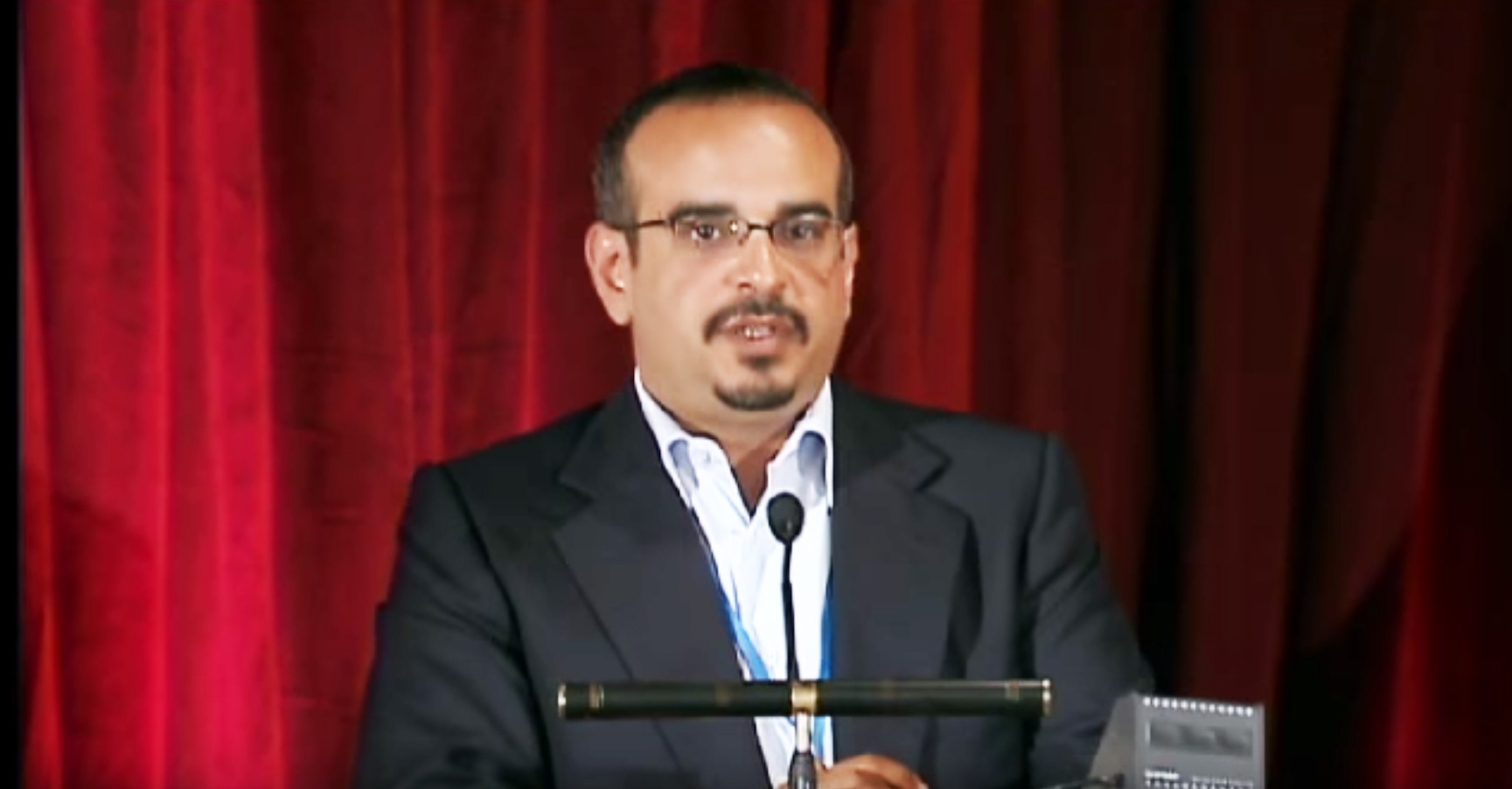

HRH the Crown Prince receives The Golden Plate Award at the 2006 American Academy of Achievement Summit – Los Angeles
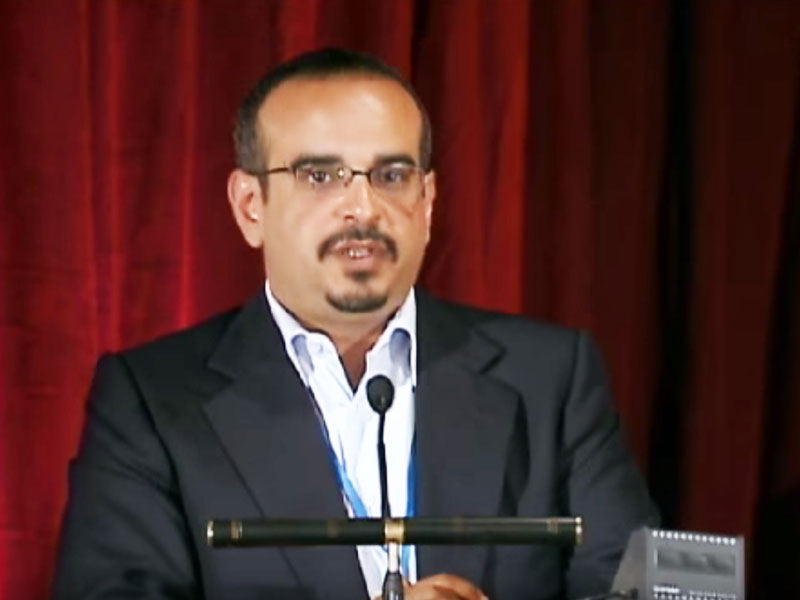
It is truly an honour to be here and I would like to thank Catherine and Wayne for this very gracious invitation, and the Academy as a whole for the nomination.
In the beginning, I was wondering whether I should accept it or not. I am thirty six years old, I still have a lot of things to achieve in life. And, frankly, I am flattered that I would be chosen for this award. I decided to accept it upon hearing that truly it was really an opportunity to meet such young and distinguished minds and future leaders both here in the United States and abroad.
So I will accept the award gladly and I will accept it on behalf of everyone who has worked so tirelessly in Bahrain to make our country prosper, reform and move forward, and join the global community as it should.
Just a little bit about me… I grew up in Bahrain, I went to high school in Bahrain… I went to university here in the United Sates and then I did my graduate degree in Europe. That gave me a valuable insight into how large the world really is and on the other hand how small it can be.
We are all citizens of this globe and I see myself as a global citizen today. I am a Bahraini first but I realise my responsibilities and duties extend far beyond the borders of my nation.
All of you I am sure have been following the news that has been coming out of my part of the world over the past few years. We have been living with that kind of life for the past few decades. Our region has seen three major wars in the last twenty years and it continues to be a source of instability on the global stage.
So really there is an increased responsibility for people of my generation to ensure that we do not repeat this cycle and that we put in place a sustainable future for our own people and our neighbours to allow growth and prosperity to flourish.
I think it would be useful just to give an idea of where I come from. How dramatic and fast the changes have been over the past few decades. I come from a country where true we had education for boys and girls from the early 20s but it was only until the 1960s that we started increasing the number of high schools in any significant number.
Our economy now has gone from one where literacy rates were quite low in the past thirty years to full literacy at this point in time. We went from a relatively small corner of Arabia that was famous primarily at one stage for pearling to now one of the most geopolitically strategic locations in the world.
We have been thrust onto the global stage; we are punching way above our weight in the region, and I am under no illusion of why. It is primarily due to the interest of global powers in the region and ensuring its stability.
We of course have a blessing and a curse which is oil. I was very happy in the late 90s when oil became I think it was 11 percent of gross domestic product (GDP) and that was at USD 8 or something. But as we all know now, oil is not at USD 8 it is far more valuable than that and it has now crept up close to approaching I believe about 30 percent of GDP. And this is a good thing in some ways, because it has allowed us to spend money on healthcare and education and it is a luxury – it is a luxury of unearned income.
But eventually populations keep increasing, oil actually is decreasing as a natural resource in Bahrain. And we need to put in place the foundations of a modern economy.
So what we have decided to do is to tackle this on three fronts: we are going to invest in people as we have done in the past; we are going to reinvent the role of government in that from being an owner-operator to a regulator; and we want to stimulate business. We want in effect for the private sector to be the main engine of growth moving forward as opposed to the public sector, which is the case today.
Ladies and gentlemen
Although this is interesting and it is relevant to me and my countrymen, I think if I was to impart something to you, I would like to discuss a little bit about the mind-set – the mind-set of reform. What does it take? What does it take to stand in the face of adversity – doubt and rise to the challenge?
We have heard a lot. or I have heard a lot, in many seminars such as this about passion, vision, courage but very few people talk about fear. Very few people talk about the effects of fear on humans trying to work collaboratively on any one project. Fear can drive individuals to not work well together in groups, because they are afraid of compromising on their values. And fear can also drive others never to take a position. They always want to agree with everybody and they want to become part of a team and they never take a stand.
It is very important that for the young people in this room, you understand that really that kind of self-doubt needs to be grabbed and understood and channelled in a positive way. I cannot begin to tell you the number of challenges we have faced pushing forward some quite controversial reforms due to fear. Fear of change, fear of loss of authority, fear of monetary instability, fear of the unknown. And if I can say one thing: it is far better when one has a passion and a dream to stick to it and to believe in it – now of course you do not want to be an iconic class all on your own – but do not try and please everyone when you are shooting for your ambition.
Really just believe in yourself and understand that a lot of the times the resistance to what you are trying to achieve, and believe me you will get a lot, I have not met anybody trying to do something worthwhile who has not faced a tremendous amount of resistance yet. You will face a lot. Just have faith and call stuff for what it is.
Let me give you a small example, a lot of our economies in the gulf are really dependent on cheap guest workers; labourers who come in form Southeast Asia. Now, this is in one way been a benefit to our national economies and I make no excuses for the horrible conditions in which a lot of these workers have come to find themselves working in, but this is unsustainable in the long run. I also head by the way the Economic Development Board (EDB), which is a private-public partnership that is charged with – it was started out as an investment gateway – and I quickly changed it to an agent of economic reform.
But this organisation, the EDB, took on this challenge of really studying the effects of migrant labour and figuring out what was our long-term strategy. And we have decided that we will move away from this system of indentured servitude and hopefully build an economy that is based on real productivity gains.
There are many ways to make a cheap buck in this world. And none worse than exploiting the vulnerable and the poor. This programme took two years to implement, and it basically involved giving full rights to all workers within the national economy. You would be surprised that here in the United States you have a visa called H-1b visa, which I strongly urge you to scrap. That is a very similar system to the one we have at home and it was designed for high-tech workers and it is being exploited as we speak here in the United States holding people beholden to certain companies, getting them here and then forcing them to work for lower wages than they could possibly earn if they had mobility.
We had a sponsorship system that we have now scrapped. We allow free movement of labour between employers. A work permit is a work permit, whether you are a citizen or not. We have instituted a tax on the employers of guest workers. And to equalise the costs to business of employing either a naturalized citizen or a foreign worker, and the proceeds from that will be poured straight into training.
So we do believe in an open economy. We do not believe in closing borders. Eventually, we hope to be able to move to immigration, but this battle that took two years of my life, fighting with our parliament, with our business community, with our labour unions, was truly a test of wills.
Now let me just say that to all you young people here do not believe everything that you see. When you are told that this is the way things are and this is the way they have been done for so many years that does not necessarily mean they are right.
We believed in what we wanted to do, we saw a possibility of changing it, and so we did. I have probably taken up more time than I should have.
I thank you for listening to me. I urge you to believe in yourselves and do not let the fear hold you back.
Thank you very much.