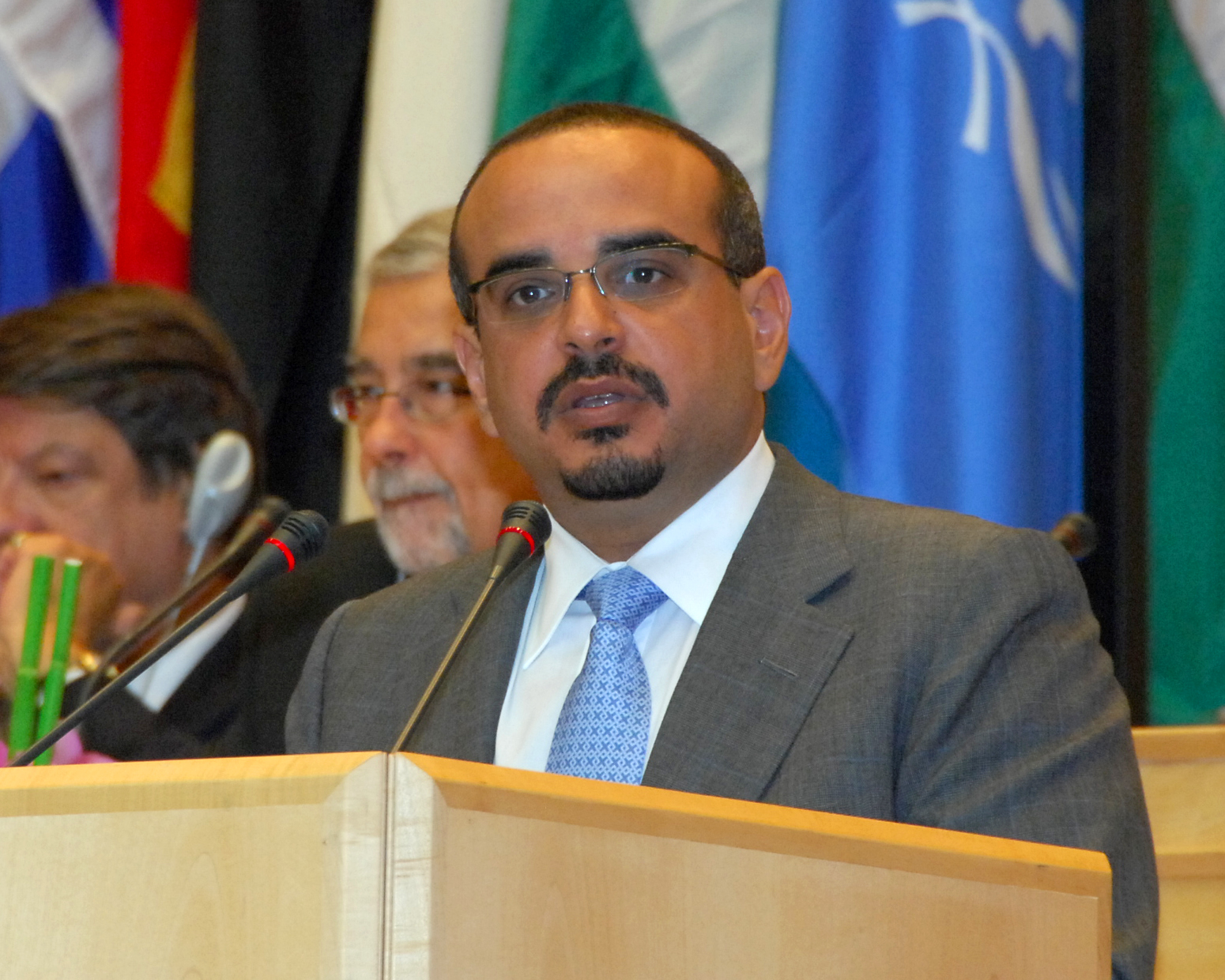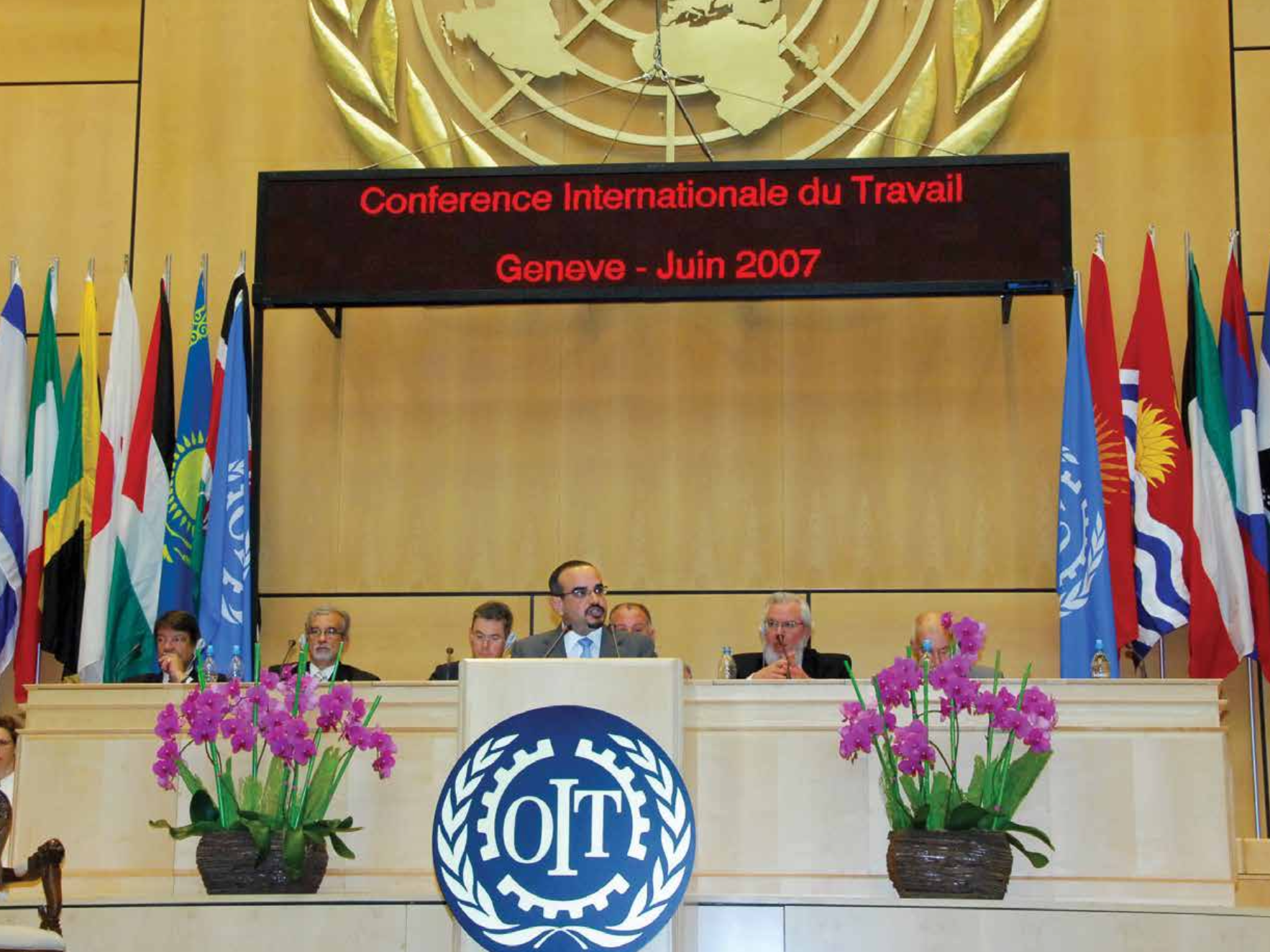

International Labour Organization Event in Geneva

Bism’llah Al Rahman Al Rahim
Good afternoon ladies and gentlemen.
President and Officers of the International Labour Organisation, Director General, distinguished guests, Your Excellencies. Thank you for inviting me to speak to you today.
It is a pleasure for me to be with you today to discuss such an important issue. One of the reasons why I feel privileged to be here with you today is because I believe that the ILO is an organisation which has at its core, in its soul, an understanding that the labour market is not simply an economic issue; it is deeply personal. There are few things in life that make as much difference to the human condition as a sense of dignity. And it is this quality – and a quest to create more of it – that must drive the ILO. It is a difficult thing to quantify dignity. It comes in part from a sense of our self. In part from our families, in part from our communities, from our creeds and our philosophies.
But increasingly in the modern world, our sense of dignity is intrinsically linked to our employment, the economic activities that we undertake on a day-to-day basis for an employer or ourselves and a way in which this career is viewed by our wider communities. It gives us our status. Quite literally, our state, our condition of being. So, it affects each one of us as an individual and it also impacts on our nation’s wellbeing.
Indeed, our regional economies are increasingly labelled according to the type of work our people carry out each day. There are rural economies, knowledge-based economies, service-led economies, manufacturing economies. From these descriptions, it becomes increasingly clear, in that an individual economy and the local economy can no longer exist in isolation. Instead of sharing skills and goods with our actual neighbours just generations ago, we are now sharing skills and goods on a worldwide scale with neighbouring countries or even continents. So, the local is global, and the global is local. It would seem that we are all world workers now. Whether we are waiting tables in Geneva; or designing cutting edge technology in Silicon Valley; whether we work in high finance in Manama; or run a small holding in Mumbai our lives, our businesses, our economies, are intertwined more deeply than they have ever been in the history of humankind.
In our Kingdom of Bahrain, and indeed across the Gulf, our economies are dependent on globalised workforces. We are building our cities and our economies, thanks in no small part to a section of the labour force that hails from Arab countries, the Indian sub-continent, from parts of South East Asia, from other nations and communities. It is a global labour force.
Of course we are not alone in relying on a workforce from other nations. The United States has long relied on workers from around the globe and throughout Europe. Migratory workforces have been instrumental in securing economic success, stimulating diversity, bringing new ideas, and fuelling innovation. So, Bahrain is an island, but our economy is not. We welcome guest workers from across the world, who come to the Gulf looking for a better life. We need to protect their access to income and employment, certainly. But in doing so we must recognise that some villages and communities may be left without some of their natural human resources, increasingly vulnerable, at the whim of global market forces beyond their control and sometimes beyond their sphere of comprehension.
At the same time, we are creating an increasing imbalance within our own labour markets. It is something that is simply non-sustainable. And that does a disservice to our own people, their futures, their understanding of what work is and does. This is why it is imperative that we work together towards fair globalisation – globalisation with justice. Why it is important for us to tap into the vital resource that this forum the ILO provides.
We must address the four cornerstones of a decent work agenda. Creating employment first and foremost. But then, also guaranteeing that there are rights associated with that work. That social protection is extended. And that opportunities for dialogue and conflict resolution are available to all. In the Gulf, there are issues regarding our labour market that need to be addressed. We need to start now, today, by admitting this to ourselves and among ourselves if we really are to move forward as a united global economic force. For this is already within our grasp. We are using the resources from our mineral wealth more strategically and sustainably than ever before. We are diversifying, we are building, and we are innovating. Today must be a stepping stone towards decision making, and definite action. Not simply a bomb with which we can sooth ourselves safe in the belief that our presence here is enough to signal our commitment to a more just and fair future. For it is not enough.
I believe that we must address three core issues relating to our labour needs now if we are to strengthen our lead for the long term. These issues have the potential to derail our progress, but they are issues that Bahrain has committed to dealing with head on. And is already seeing successes, as a result of this commitment.
First, we must address the reality of our changing demographic that brings with it an increasingly young workforce. Second, something I have just touched on, we must address our need to rely on imported workforces. And third, we must be committed to the creation of an environment that provides inclusive opportunities for success. For we must give our young people not just access to education and economic inclusion, we must also give them access to aspiration. Every child deserves the chance to become whatever they want to become based on their skills, hard work, and determination. By committing today to building a shared platform to increase social dialogue to address these three key issues, we can begin to build workable solutions. Solutions that have the support of those in work and those looking for work. And the support of stakeholders across government, the private sector, in education, in trade unions, in NGOs.
In Bahrain, as I mentioned, we are making innovative strides. I believe these moves merit recognition and conserve as models for regional cross-governmental initiatives.
We have undertaken a comprehensive economic reform programme. A programme that looks at labour market reform and education reform together holistically. A programme that recognises the need for our education system to match the economic ambitions and aspirations of our nation. One which will fill the skills gap in the labour market of today and of the future. Our approach goes beyond simply the needs of our own citizens, and embraces the entire labour market, our global workforce. This realistic yet innovative position will serve us well and allow our economy and our talents to grow and take us forward through the century.
We have created two new public bodies that will make our home-grown workforce increasingly attractive to industry, and help build our own new breed of entrepreneurs. The Labour Fund has been established to increase productivity among private sector companies, large or small, as this has a direct impact on our economic growth. In addition, the Fund is developing and implementing training and retraining programmes with partners in our private companies, universities and colleges. This training is focused on the development of the skills needed to succeed in the modern workplace across key identified growth industries. The Labour Fund seeks to fill the gaps, not only in our current labour market, but also in the market of the future. Its focus is on productivity, creativity, innovation, building skills that will allow us to realise our dreams as a nation.
The Labour Fund’s partner, is a Labour Market Regulatory Authority. A body that crosses government departments to formulate the best possible approach to our national labour market structure. It creates a system whereby there is a free and fair access to employees, whether guest or local at equal costs to employers. It ensures that employers can focus on productivity while guaranteeing that all employees have access to decent work. Freedom of mobility and work in a safe and dignified environment. At the same time, we are removing the contradictory legislation of quotas for Bahraini employees. Legislation that hampers the growth of the private sector while simultaneously patronising the very people that was created to support.
With the help of the ILO, we have initiated unemployment insurance protection, and are building a comprehensive employment programme to match the skills and needs of those looking for work with available employment opportunities. And we are aligning our education system far more closely with the needs of employers at every level to ensure that what our students learn in the classroom gives them the skills and experience they need to succeed in the workplace, and the creativity and drive needed to start a business of their own.
We are looking to the future to identify the next growth industries and developing training programmes tailored to these sectors. Sectors in which we know our young people will be able to find rewarding and stimulating careers. We are developing not only our academic programmes in primary schools, in secondary schools, but also vocational programmes, creating a polytechnic institute with a focus on practical experiences to enable everyone to get fair access to a good education, one that provides a decent standard of living. Let me also stress here that Bahrain is committed to the freedom of all workers to join unions and the freedom for unions to be formed. We encourage open and honest communication, and dialogue between employee and employer. And we respect the effective role that unions can play in ensuring channels are open to enable this dialogue to take place. These are just some of the ways in which we in Bahrain are addressing not just the needs of global market forces, but also much more pressing individual needs. The right to decent work. Work with a sense of dignity, work that allows people to provide for their families and their communities.
I would like at this time to pay tribute to all of those people who have invested time and energy in working to improve the labour market in Bahrain, whether they are in government, in the private sector, or in the unions themselves. Those who have endeavoured to understand our individual situation at the deepest level, and then with real innovation and foresight outlined strategies and solutions that meet the ambitions and the aims of our people, need to be thanked. Thank you.
I touched earlier on the pressing employment issue in Bahrain and throughout the Middle East, created by a rapidly changing demographic. Unlike many western nations that are now seeing their birth rates decline rapidly and their populations age, in the Middle East, we have a thriving young population. In fact, in the MENA region, almost 20 percent of the population, one in five people, is aged between 15 and 24. This means we have an amazing and largely untapped resource of youth, of enthusiasm, of vitality. Of global citizens ready and able to embrace technology and play their role in a knowledge-based economic future. It is a great blessing for us but is also one that we need to nurture carefully. For as the aims and purpose of the ILO so clearly point out, ‘poverty anywhere is a threat to prosperity everywhere. And poor angry young men are perhaps its greatest threat.’ We must ensure that our young people do not find themselves disenfranchised. Unemployment and more importantly, underemployment, are capable of causing great harm at an individual level, and at a societal level. As we have already acknowledged, that these employment issues do not impact simply on a solitary home or village. Instead they create a malaise and discontent which if allowed to like a disease will eat away at the very fabric of our civilization. Let me also take this opportunity to mention an issue that is of deep importance to us all. We must not forget the efforts and the needs of our brothers and sisters labouring in Palestine. Hardworking people who are struggling with decency and dignity against the tide that threatens to overturn them at any moment. We call for the end of the illegal Israeli occupation for the Palestinian territories through dialogue that leads to a mutually agreed two-state solution. We also call for the immediate easing of the economic conditions that have led to indefensible levels of unemployment currently at 60 percent. These steps are key to ensuring that hope is allowed to remain and the light of justice is not extinguished.
When it comes to the quest for solutions, I call on the public and private sectors to work together. To invest together; to find new roots to prosperity, and through this prosperity, peace. For I strongly believe that many of the problems of discontent, discord, and hostility around the world can be changed in no small part by making economic improvements to ordinary lives by increasing access to and abundance of dignity.
That is why today, here and now, I call on our neighbours and our partners in the GCC and across Asia, to join with me. I call upon the heads of states to accept my invitation and come to Bahrain to take part in the first interregional social dialogue summit on labour issues. To bring together sending and receiving countries for the first time at that level to discuss openly and honestly the real impact of globalisation on each of our home nations. And I call for the involvement not just of government, for it must be true social dialogue and true debate if we are to forge integrated decent work agendas and foster dignity. Join us in Bahrain and together we can build a tripartite social dialogue structure within our region. Workers, employers, and government coming together. Talking together and working together for the wellbeing of all of our futures.
Finally, let me close by saying: I understand we are dealing with a difficult reality. There are no simple answers, no quick fixes. But we have been trusted by the people of our respective nations to build societies that provide the best possible opportunities in life, that give them decency and dignity. We are not by any standards at the whims of the global economy. We are the people who shape that economy. And if we choose to shape it for the short term gain and by working in isolation, then we risk building a future that we may not like when we get there. Today the ILO has given us an opportunity, a platform, a springboard that we can choose to use or not to forge a better future for us all. A future for all of our workers and our citizens to live and work a decent and dignified life. Let us all put in the effort. Let us not waste this chance.
Thank you very much.